Editorial
What’s on Your Mind?
Keshia S. Elder, OD, MS, MS, FAAO
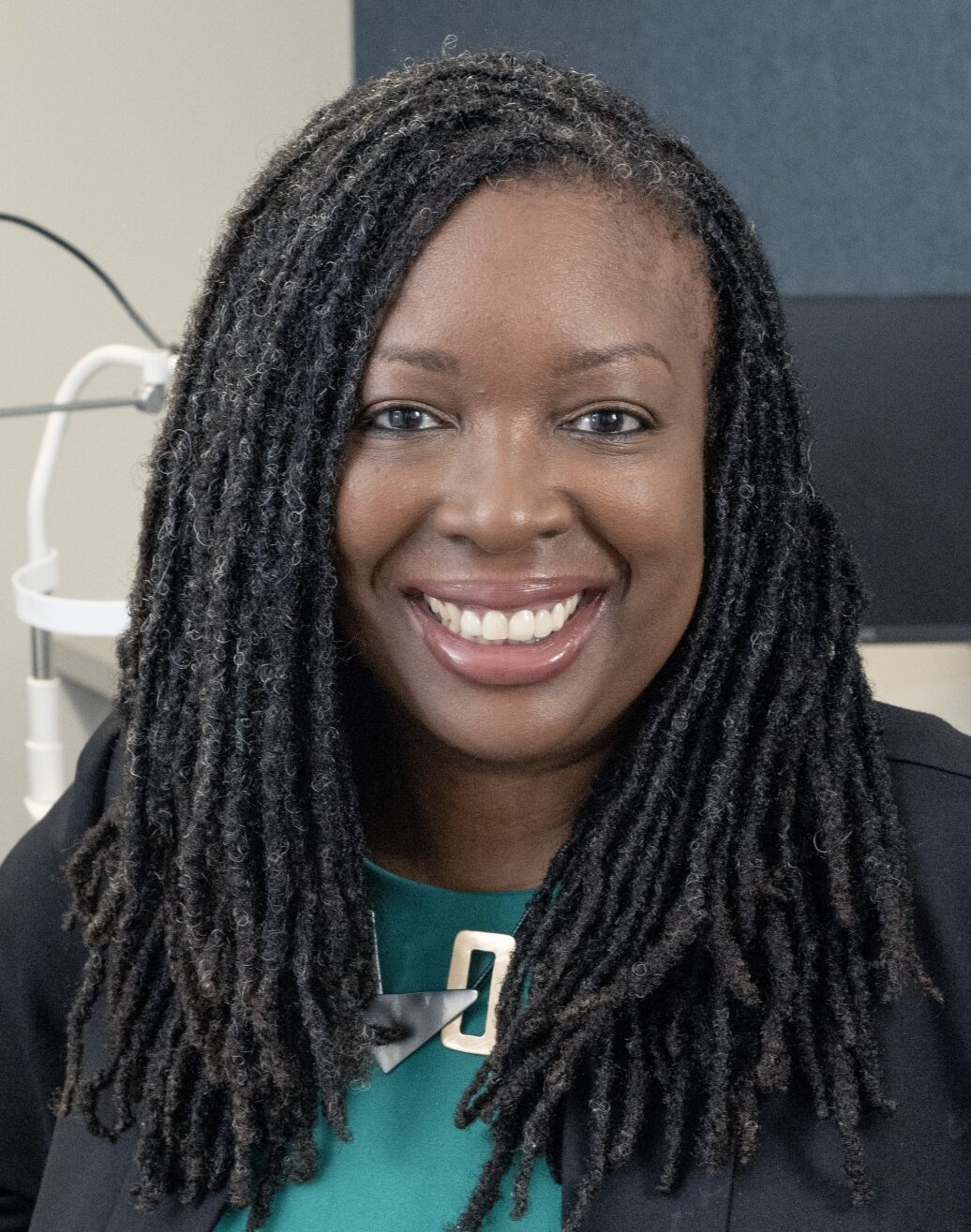
Keshia Elder, OD, MS, MS, FAAO
As I continue settling into my new role as Editor of Optometric Education, I want to hear more about what is on the minds of the journal readership.
Pertaining to the journal itself, in addition to the peer-reviewed research papers published in each issue, would you like to see articles or recurring features that address a specific topic or topics, and what would those topics be? Over the years, the journal has presented many recurring features on specific topics, such as technology in optometric education, teaching theories and methods and book reviews. We are always open to considering your ideas for guest editorials and installments of Educator’s Podium, too.
I am also interested in knowing what you feel are the most pressing challenges and issues you face as you navigate through your daily responsibilities as teachers and doctors. We of course face some overriding issues that are already matters of national conversation and solution-seeking, but we may also have more subtle observations and experiences that feel as if they may become overriding issues.
Is the Student-Teacher Relationship Shifting?
I’ve been thinking more lately, for example, about our need as optometric educators to compartmentalize. Given the multiple roles we fill, the need has always been there. But I feel it is becoming much more necessary. I wonder if this is at least partly due to students wanting to have a more personal connection to their faculty and administrators, as was found in a Student Voice survey by Inside Higher Ed and College Pulse.1 In that survey, approximately one-third of students indicated that professors taking more of an interest in getting to know them would promote their success. Certainly, considering more holistically what students need has its benefits, such as a better understanding of their overall well-being, but how far from the traditional, strictly professional rapport is prudent? Should we be accepting invitations to connect on social media platforms that we also use personally? (My policy has been to connect, if asked, only on LinkedIn. Once a student graduates, I’m open to connecting on other platforms.) Does the kind of tie students seem to be seeking further complicate already difficult conversations about their academic successes and failures? As far as compartmentalizing, how can we be the teachers our students need us to be, the doctors our patients need us to be, and still maintain a part of ourselves?
Drop Me a Line
What do you think? Is it time to move past some traditional boundaries when it comes to the teacher-student relationship or perhaps set some new ones? Let’s share thoughts and potential strategies. I welcome your insights on this and any topic that is on your mind. Email address below.
Reference
1. Flaherty C. What Students Want (and Don’t) From Their Professors, March 23, 2023 [Internet]. Washington, DC: Inside Higher Ed; c2024 [cited March 8, 2024]. Available from: https://www.insidehighered.com/news/2023/03/24/survey-faculty-teaching-style-impedes-academic-success-students-say