Editorial
As My Tenure as Editor of this Journal
Comes to an End …
Aurora Denial, OD, FAAO, DAAO (OE)
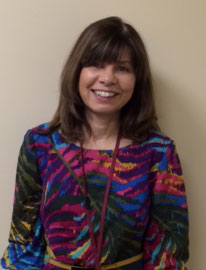
Aurora Denial, OD, FAAO, DAAO (OE)
This is my final editorial as Editor of Optometric Education. I started this journey as Associate Editor in 2009 and moved into the role of Editor in 2010. The saying “it takes a village” certainly applies to publishing a journal. As Editor, I worked with a team of people whose dedication and hard work led to the successful publication of 39 issues of the journal in the past 13 years.
Many Thanks
I would like to thank the former and current Executive Directors of ASCO, Marty Wall, MPA, CAE (Ret.), CPC, and Dawn Mancuso, MAM, CAE, FASAE, for their unwavering support. The behind-the-scenes ASCO staff led by Communications Director Kimberly O’Sullivan were always available and a pleasure to work with. Independent contractors Kerri McTigue (graphic designer), Mia Jordan (website developer) and Desiree Ifft (managing editor) have been instrumental in the production of the journal. I have worked most closely with Desiree. She is highly organized, a great editor, communicates well with authors and reviewers and has been an enormous support and help to me. Desiree’s expertise and skills are a critical component in publishing the journal.
I also thank all current and former volunteer members of the Editorial Review Board, whose work ensures the quality of the journal. Reviewing a manuscript for publication often takes several cycles of revisions, is time-consuming and by the time of publication greatly appreciated by the authors. Finally, I would like to thank all of the contributors to the journal. Without this group there would be no journal to publish. I commend the authors who submitted articles that were not published. Successful publications involve a learning curve that is often frustrating. Feedback provides an opportunity to grow, develop and improve.
Over the past 14 years, it has been a privilege to oversee the journal and contribute to the optometric education literature. My first task in 2010 was to increase inventory and get faculty excited about scholarship. Faculty are often not formerly trained in research and scholarship. Interest is always present, but many are also intimated. Over the course of a few years, I visited 20 schools and colleges of optometry. This was a great opportunity to meet faculty and discuss scholarship opportunities. In 2011, ASCO initiated the Educational Starter Grants. These grants (supported by The Vision Care Institute, LLC, an affiliate of Johnson & Johnson Vision Care) funded short-term projects and were designed to help faculty get started. The grants were able to support many faculty members. In addition to increasing inventory, the journal introduced new venues for publication such as Educator’s Podium and Educator’s Toolkit. The journal also tackled important issues such as interprofessional education, diversity, and cultural competency in the form of theme editions. The writing of editorials produced a small amount of stress for me but also gave me the opportunity to communicate my thoughts and ideas to the education community. I enjoyed writing all of them. The two that received the most reader response were “Should We Require Class Attendance?” (Fall 2015) and “The Four-Year Optometric Education Program: Something’s Got to Give” (Summer 2021).
I Leave You in Capable Hands (and with an AI-generated poem)
Looking to the future, I am thrilled that one of the journal’s Associate Editors, Keshia Elder, OD, MS, MS, FAAO, will be assuming the role of Editor. I have worked with Dr. Elder over the past year to ensure a smooth transition. Dr. Elder is the current Dean of the College of Optometry at the University of Missouri-St. Louis. She holds two Master’s degrees, one in Vision Science and a second in Instructional Design, from the University of Alabama at Birmingham in addition to her Doctor of Optometry degree. She has been on the journal’s review board for many years and is always willing to help with additional projects.
I predict that the future of the journal will include significant scholarship in the areas of artificial intelligence (AI) and mental illness in the student population. AI will have a major impact on the practice of optometry as well as the education process. How to use AI in an ethical and efficient manner will be a hot area for education research. AI is an amazing tool that requires a sophisticated reader with good critical-thinking skills to utilize it to the maximum. It is disruptive technology with the potential to change the way we educate. Over the years we have also seen a rise in mental health issues that impact our students and the learning environment. How we teach and educate will need to take this into consideration. We cannot change the culture of a generation of students. We will need to provide a learning environment that supports them while maintaining high education standards.
In closing, I thank ASCO for its enormous support and giving me the opportunity to contribute to the profession over the past 14 years. And, thank you AI for generating a poem reflecting on the meaning of an editor:
Being an editor is a privilege
To contribute to the field
It’s a way of advancing science
And making discoveries revealed
I am the editor for a journal
That educates the optometrists
I select and publish the articles
That teach them how to practice best
I cover topics from the basics
To the latest innovations
I aim to provide a resource
That supports their education
I work with authors and reviewers
To ensure the quality and relevance
I also seek to foster a dialogue
And a community of peers
I am the editor for a journal
That educates the optometrists
I hope to contribute to their growth
And their professional success