Q&A
Meet the Journal’s New Editor
Keshia Elder, OD, MS, MS, FAAO, discusses milestones and making her way to optometry
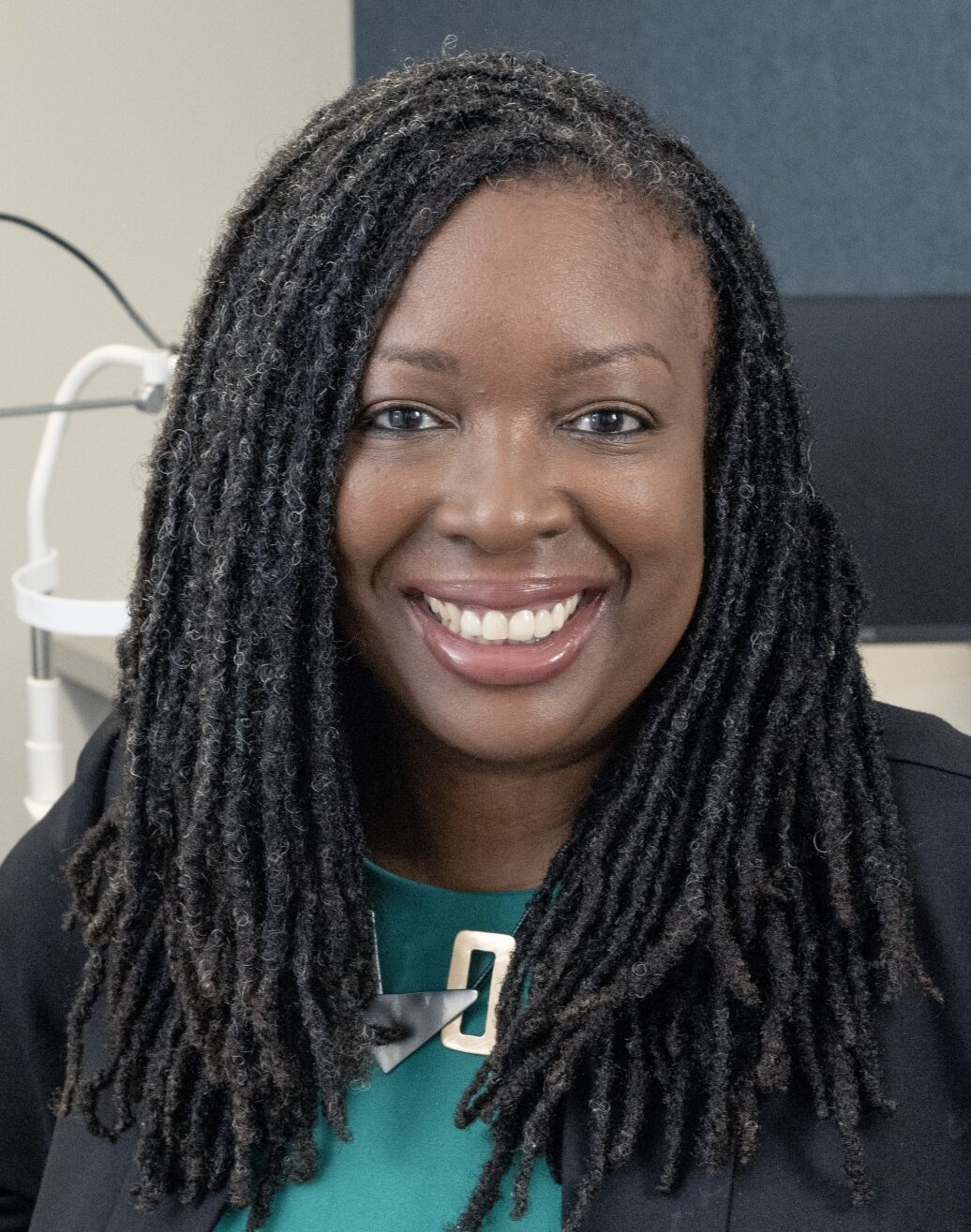
Keshia Elder, OD, MS, MS, FAAO
Keshia Elder, OD, MS, MS, FAAO, talked with Kimberly O’Sullivan, ASCO’s Director of Communications, about becoming editor of the Association’s peer-reviewed online journal, Optometric Education (OE):
ASCO: Dr. Elder, congratulations on becoming the editor of Optometric Education. Before we talk about the journal, people may not know that you are the new(ish) dean of the University of Missouri at St. Louis College of Optometry and the first Black/African American woman to be appointed dean of an ASCO institution. Congratulations and what an historic achievement.
Dr. Elder: Thank you! Thank you! Thank you! Whenever someone makes the comment that I’m the first Black/African American female dean of an optometry institution, it catches me by surprise. Surprised because it took until 2022 for this milestone to be reached. Of course, I am grateful to be in this place and able to continue my journey in optometric education. As I have said before, I may be the first, but I will not be the last.
ASCO: Congratulations again on becoming dean. Can you explain your journey to becoming the editor of OE? What interested you in the journal?
Dr. Elder: I think this journey has been a long time coming. I served on the Editorial Review Board for years when then-editor Aurora Denial, OD, FAAO, DAAO (OE), sent out a call for an associate editor. I was very interested in this opportunity and reached out to her. I come from a family of educators. My mom and dad were elementary school teachers. My undergraduate degree is in education. I taught high school math for a semester before I started optometry school. I consider myself a clinician-educator. The journal, which as you mentioned is peer-reviewed, is the only journal solely focused on optometric education, and it is very much aligned with my interests. I was thrilled to become an associate editor and I learned so much that becoming the editor has been less daunting. I couldn’t be more grateful for the opportunity.
ASCO: You mentioned that OE is the only journal dedicated to optometric education or academia. What do you think people should know about academic optometry that they may not know?
Dr. Elder: The first thing that comes to mind is that most optometry professors are not trained teachers. We are mainly clinicians and subject-matter experts. Just because you are a great clinician does not necessarily mean you are a great teacher. Most of us must work at it. People should understand that when you are in the optometric education space you need to maintain clinical skills, but you also need to devote time to becoming a better educator. The pedagogy of teaching is very important and OE addresses that.
ASCO: What is the process of getting an article published in OE?
Dr. Elder: Optometric Education is an open-access, peer-reviewed journal that is available online free of charge. I recommend people review the Publication Guidelines online if they are interested in submitting an article. If a submitted manuscript is appropriate for the journal’s audience, the editor assigns it to two or more members of the Editorial Review Board, who are subject-matter experts on the manuscript topic, and the peer-review process begins. Initial reviews are usually completed approximately a month after submission, and when a paper is approved it is published within the next 12 months. Authors should submit two copies of their manuscript, one blind and one unblind. The blind copy omits the name(s) of the author(s), their institution(s) and any other information that could reveal their identity.
ASCO: What would you say to someone who is interested in becoming a peer-reviewer and/or submitting an article for consideration?
Dr. Elder: For people who are considering submitting – I say do it. Take a look at the journal homepage to see the types of articles that are published. Some go through the peer-review process, and others do not. We publish original research, Teaching Case Reports, Educator’s Podiums, Guest Editorials and special themed issues such as the one we’re working on now regarding global optometric education. I would also suggest potential submitters consider what their peers at other institutions are researching and don’t be afraid to ask questions.
For those interested in becoming a peer-reviewer, I recommend they publish a peer-reviewed paper first. I have found that a good peer-reviewer is typically also a good researcher. Feel free to reach out to the journal staff because we periodically update our Editorial Review Board. Of course, also talk to the dean/president at your institution and ask for any insight and suggestions they may have.
ASCO: Tell me more about you and your journey to optometry. I remember you saying once that you “found your people” in optometry. I love that. Can you expand on that a bit?
Dr. Elder: I find that Doctors of Optometry are a dichotomy. Many of us are personally introverted but we talk to people all the time. I know many of us were drawn to optometry because we are caregivers who are very comfortable in one-on-one settings but may be less comfortable in larger settings. We are intellectuals who care for the greater good. When I reflect on myself, my personality and other Doctors of Optometry, I see how we do a lot of great things to help patients quickly and I see how we are directly and profoundly impacting the lives of people.
I truly do believe I have found my people.
ASCO: Thank you. As we wrap up this interview, we must say a huge thank-you to Dr. Denial who was editor of OE for 14 years! Her accomplishments and dedication to the journal cannot be overstated.
Dr. Elder: I absolutely agree. Dr. Denial has been an outstanding editor, leader and support system to me as we were navigating the outgoing and onboarding. When I think of her and all she has done for optometric education and for me personally, I don’t have the correct words to fully describe all the gratitude I have.
ASCO: Thank you, Dr. Elder. We look forward to reading the future editions of Optometric Education.