PEER REVIEWED
Experiences and Attitudes of Optometry Students Regarding Online Learning
During the COVID-19 Pandemic
Darshan Chetty, BOptom, Fanelesibonge Sinamile Dubazane, BOptom, Catherine Lafitte, BOptom, Zothile Ndwandwe, BOptom, Faatima Zahra Rauff, BOptom, Phumzile Sibiya, BOptom, Andile Tembe, BOptom, Nonkululeko Gcabashe, BOptom, MOptom, and Nishanee Rampersad, BOptom, MEd, PhD
Abstract
This study used a self-administered online questionnaire to assess experiences and attitudes of optometry students regarding online learning. A total of 159 participants responded to the questionnaire yielding a response rate of 66.3%. Approximately half of the participants (n = 78, 49.1%) were satisfied with online learning and motivated to participate in (n = 75, 47.2%) and attend (n = 89, 56.0%) online learning. However, many participants felt that online learning cannot compensate for practical education (n = 99, 62.3%) and would prefer a combination of online and face-to-face learning for future theoretical courses (n = 116, 73.0%). This information should be used by optometry curriculum developers and educators to strengthen online learning to enhance the learning process.
Key Words: optometry education, online learning, optometry students, COVID-19 pandemic
Introduction
Coronavirus disease 2019 (COVID-19), which is caused by a severe acute respiratory syndrome coronavirus 2 (SARS-CoV-2), was the cause of a lengthy global pandemic.1 The novel virus was identified in Wuhan, Hubei Province, China, in December 2019. The World Health Organization declared COVID-19 a public health emergency on Jan. 30, 2020, and a pandemic on March 11, 2020.2 Since the outbreak of COVID-19, variants of the virus have emerged and become dominant in many countries.3 As of July 9, 2023, more than 691 million cases and 6.8 million deaths caused by COVID-19 have been confirmed worldwide, making it one of the deadliest pandemics in history.4 Several countries adopted national lockdowns and implemented social distancing and isolation protocols to stop the spread of the virus.5,6 South Africa started its lockdown on March 26, 2020. The social distancing regulations during the period of lockdown led to suspension and/or restrictions of social, religious and political gatherings and had a profound impact on academic activities at all levels of the education system.7
The COVID-19 pandemic resulted in temporary closures and unprecedented adjustments in the way in which academic activities were implemented in schools and higher education institutions around the world.8,9 This has had a devastating impact across all levels from basic to higher education with 75% of school learners in grades 1 to 12 in South Africa reported to be a full year behind where they should be.10 Rotational attendance and sporadic closure of education institutions resulted in students losing 54% of learning time.10 Globally, approximately 220 million students in the higher education sector were affected by disruptions caused by COVID-19 leaving institutions with the challenge of how to implement remote learning to save academic years, recover educational losses and ensure that no students were left behind.8 Many higher education institutions had to quickly devise alternative methods to continue with academic activities and this included adopting distance and remote learning.11,12 Online learning, also referred to as e-learning or web-based learning, is a type of distance learning that uses electronic resources. It is different from traditional face-to-face learning as teachers and students use technology platforms such as video and audio messages, discussion forums and webinars as opposed to conventional in-person discourse to interact with each other.13 As a result, various socio-economic factors ― including access to digital devices and technology, stable internet connection, availability of electricity, personal study space, technological knowledge and digital literacy skills ― may influence the online learning process.9,14
Some studies have reported on undergraduate students’ experiences and perspectives of online learning during the COVID-19 pandemic.13,15-19 Such information from students is necessary to identify areas of strength and best practice for online learning as well as areas where improvements need to be made for more effective online learning.20 Sharma et al.15 investigated medical students’ (n = 434) satisfaction with online learning and noted that more than half were satisfied with online classes. In contrast, Adnan and Anwar reported that students from a higher education institution in Pakistan (n = 126) believed face-to-face learning was more beneficial than online learning for effective learning experiences. In addition, Adnan and Anwar reported that limited access to the internet, reduced interaction with teachers, delayed response times and reduced classroom socialization were major challenges that impeded online learning. Maqableh and Alia investigated humanities, science and health science students’ perceptions and satisfaction with online learning and reported that more than one-third were dissatisfied with online learning experiences because of technological and connectivity challenges as well as time management issues.17 As there are limited studies that have focused on optometry students, this study evaluated the experiences and attitudes of optometry students regarding online learning during the COVID-19 pandemic.
Methods
Research design and study population
This study used a case study research design and was conducted at the University of KwaZulu-Natal (UKZN). Ethical approval was obtained from the Humanities and Social Science Research Ethics Committee (HSSREC/00002846/2021), and all participants provided electronic informed consent prior to participating. The study participants included all eligible optometry students at UKZN. During the 2021 academic year, all 240 registered optometry students were invited to participate in the study through links sent via WhatsApp class groups. A reminder was sent after the initial invite to achieve a better response rate. At the time of data collection during the 2021 academic year, optometry students at UKZN were still engaging in 100% online learning.
Data collection
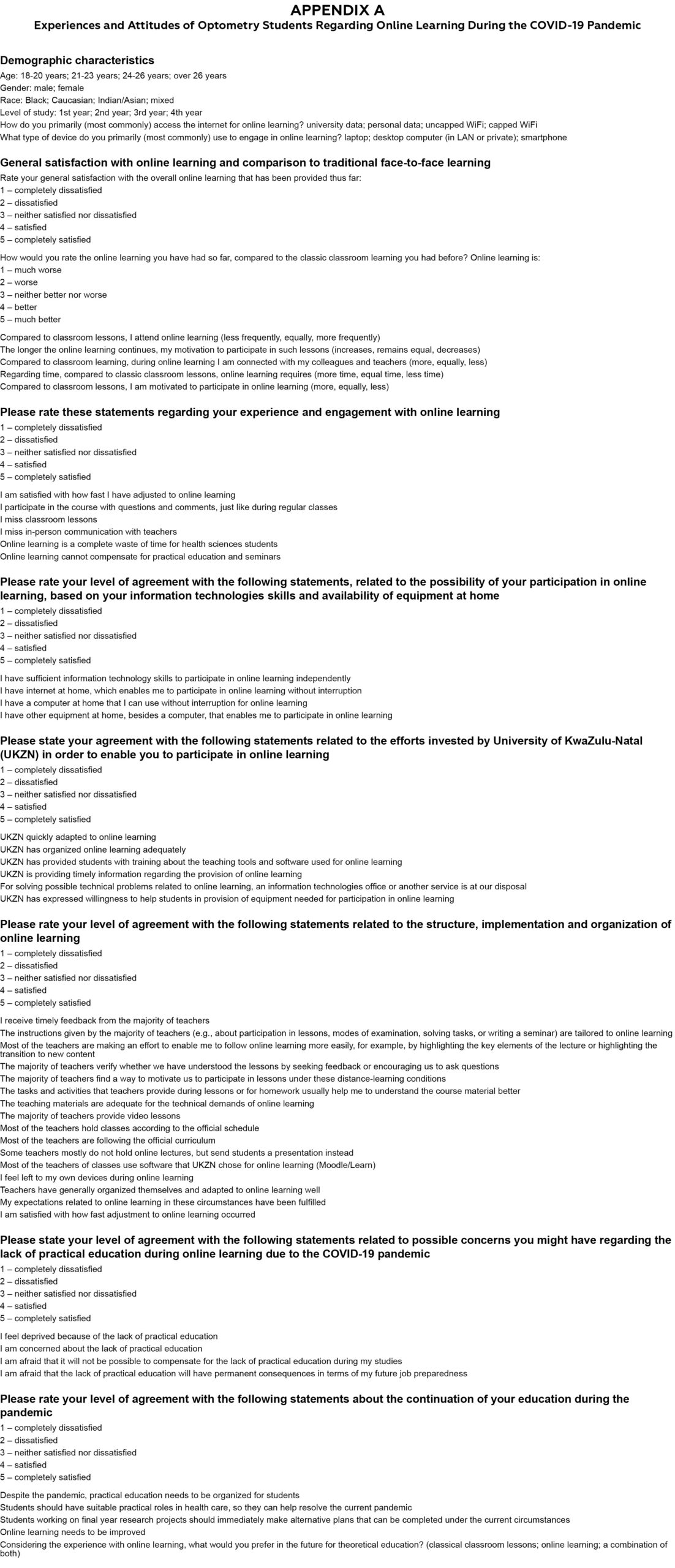
Participants answered an online questionnaire that focused on their experiences, attitudes and concerns regarding online learning (Appendix A). The questionnaire was adapted from a previous study18 and modified for relevance in the South African context. Puljak et al. reported that the questionnaire was developed by subject experts in psychology, pedagogy, medical education and research methodology and piloted before being used.18 The online questionnaire was created through Google Forms and was available from Aug. 14 to Oct. 10, 2021. The anonymous online questionnaire, which took an average of 10 to 15 minutes to complete, consisted of three sections. Section 1 contained the study information and consent to participate; section 2 contained questions related to demographic information; section 3 contained questions that explored students’ experiences, attitudes and concerns regarding online learning. The items in section 3 focused on general satisfaction with online learning and comparison to traditional face-to-face learning, experience and engagement with online learning, information technologies skills and availability of devices to participate in online learning, efforts invested by UKZN for online learning, structure, implementation and organization of online learning, perceptions related to lack of practical education and continuation of education during the pandemic. Overall, participants responded to 53 questions in the online questionnaire using either a 5-point Likert scale (completely disagree, disagree, neutral, agree and completely agree) or closed-ended responses. Prior to data collection, the questionnaire was piloted on seven students who were also undertaking online learning with a similar demographic profile. Based on the responses of the pilot study, no further amendments were made to the questionnaire.
Data analysis
Data from only fully completed and submitted questionnaires were captured on Microsoft Excel and analyzed using the Statistical Package for Social Sciences version 27. Data were analyzed using descriptive statistics including means, standard deviations, frequency counts and percentages. For the results, the Likert scale responses of “completely disagree” and “disagree” were combined and reported as disagreement, while responses of “completely agree” and “agree” were combined and reported as agreement.
Results
Student characteristics
A total of 159 participants, 123 females and 36 males, completed the survey yielding a response rate of 66.3%. The sample was multiracial of which the majority self-reported as Black (n = 111, 69.8%), followed by Indian (n = 45, 28.3%), Coloured or Caucasian (n = 3, 1.9%). Regarding the level of study, 29 (18.2%) were in first year, 47 (29.6%) were in second year, 53 (33.3%) were in third year and 30 (18.9%) were in fourth year. Just more than half of the sample (n = 83, 52.2%) used university-provided data to undertake online learning, while the other participants used either uncapped Wi-Fi (n = 46, 28.9%), capped Wi-Fi (n = 20, 12.6%) or personal cellular data (n =10, 6.3%). The majority of participants used laptops for online learning (n = 139, 87.4%), while a small proportion used either smartphones (n = 19, 11.9%) or desktop computers (n = 1, 0.6%).
Satisfaction with online learning and comparison to traditional face-to-face learning
Approximately half of the participants (n = 78, 49.1%) were satisfied with online learning, followed by 58 who provided a neutral opinion (neither satisfied nor dissatisfied) and 23 who were dissatisfied. The average satisfaction score and standard deviation for online learning, which was assessed using a scale of 1 to 5 (maximum), was 3.4 ± 0.9. When comparing traditional face-to-face learning with online learning, 51 participants felt that online learning was better, 46 found that it was worse, while 62 provided a neutral response of neither better nor worse. Most of the participants reported they were equally motivated to participate (n = 75, 47.2%) and attend (n = 89, 56.0%) online learning when compared with face-to-face learning. In terms of time, most participants (n = 92, 57.9%) found that online learning required more time compared with face-to-face learning, while other participants reported that it required less time (n = 28, 17.6%) or the time required was the same (n = 39, 24.5%). More than two-thirds of participants reported that for future theory courses they would prefer a combination of online and face-to-face learning (n = 116, 73.0%) followed by a small proportion of those who preferred face-to-face learning only (n = 26, 16.4%) and online learning only (n = 17, 10.7%).
Experience and engagement with online learning
The majority of participants (n = 91, 57.2%) reported they were satisfied with how fast they had adjusted to online learning (Table 1). More than half of the sample indicated that they missed classroom lessons (n = 81, 50.9%) and in-person communication with teachers (n = 92, 57.9%). Even though most participants disagreed with the statement that online learning is a complete waste of time for optometry students (n = 85, 53.5%), many felt that online learning cannot compensate for practical education, such as supervised and self-directed sessions in the laboratory and clinical settings and seminars (n = 99, 62.3%). There was no predominant response concerning student participation in the form of questions and comments in online courses as 60 participants indicated that they agreed, while 62 participants indicated that they disagreed with this statement (Table 1).
Personal resources (skills and equipment) and efforts invested by UKZN for online learning
When asked about information technology skills and equipment to undertake online learning, more than half of the participants indicated they had sufficient skills (n = 111, 69.8%), internet access (n = 92, 57.9%), a computer (n =109, 68.6%) and other equipment (n = 83, 52.2%) to participate in online learning without disruption (Table 2). The majority of participants felt that UKZN had quickly adapted to online learning (n = 87, 54.7%), organized online learning adequately (n = 88, 55.3%) and provided student support in the form of training (n = 83, n = 52.2%) and available technical problem-solving services (n = 77, 48.4%) for online learning. Furthermore, most participants agreed with the statements that UKZN provided timely information regarding the provision of online learning (n = 87, 54.7%) and expressed willingness to aid students with equipment needed for engaging in online learning (n = 86, 54.1%).
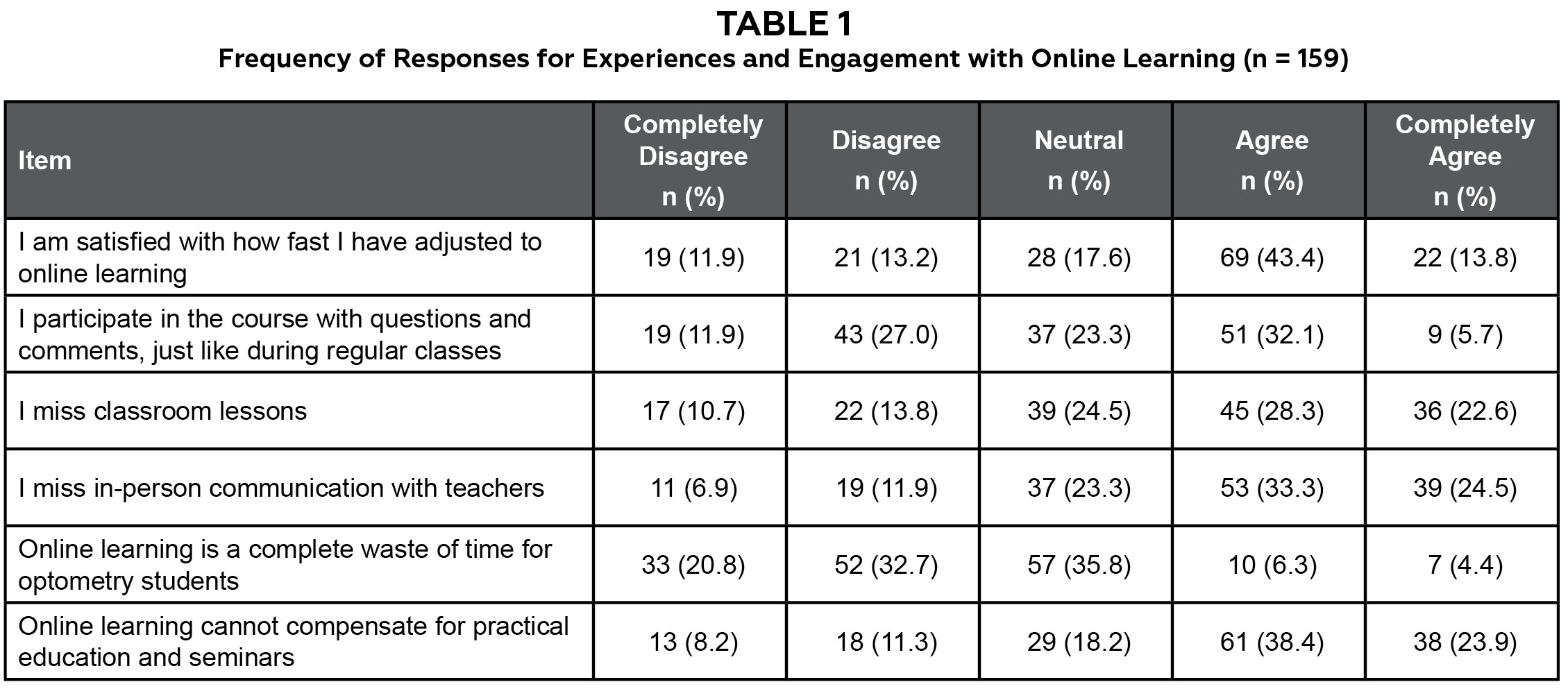 Table 1. Click to enlarge |
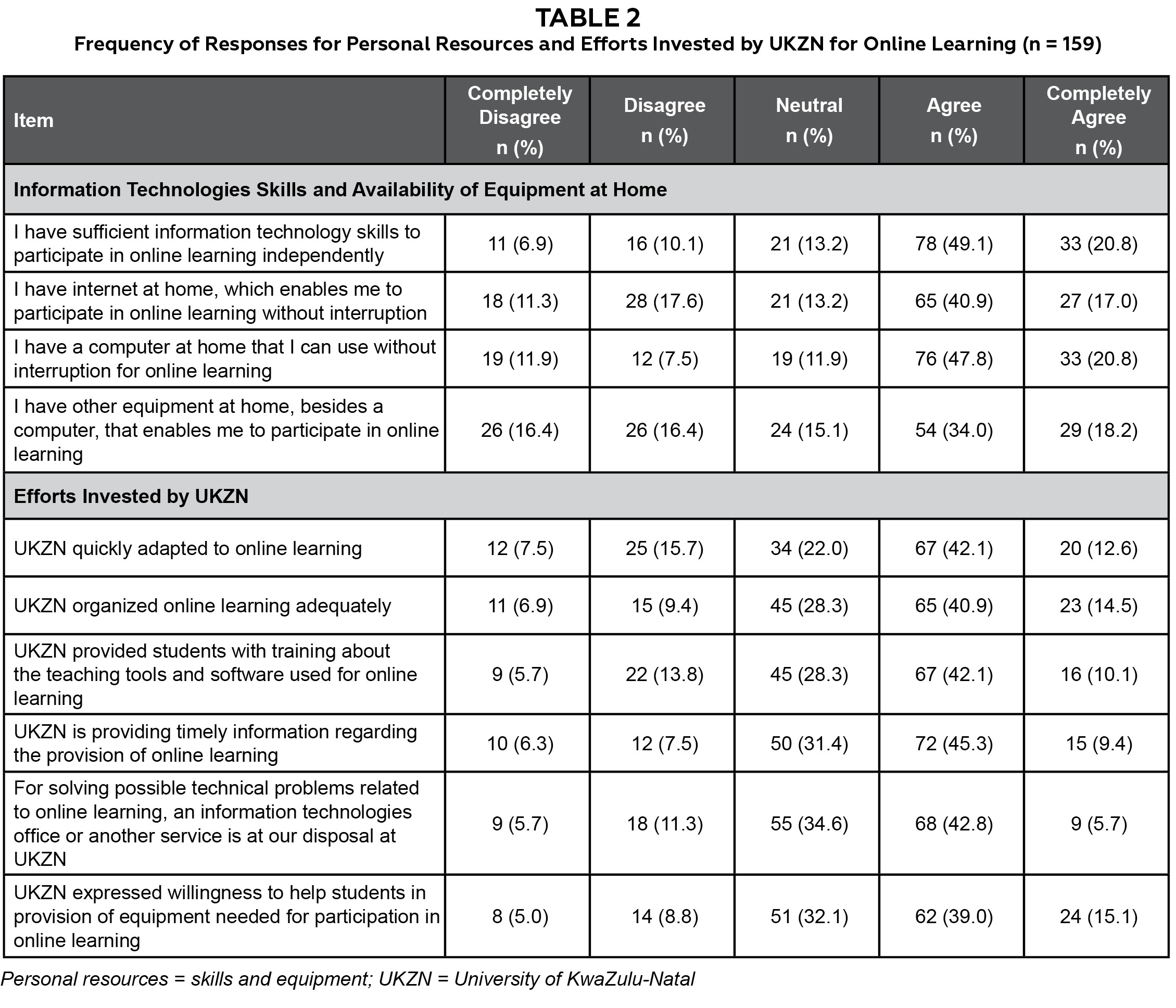 Table 2. Click to enlarge |
Perceptions related to lack of practical education and continuation of education during the pandemic
More than 40% of participants felt deprived (n = 65, 40.9%) and were concerned (n = 79, 49.7%) about the lack of practical education in online learning (Table 3). In the same way, just less than half of the sample felt that it would not be possible to compensate for missed practical education during their studies (n = 75, 47.2%) and agreed that the lack of practical education will have permanent consequences on their job preparedness for the future (n = 73, 45.9%). In terms of continuation of education during the pandemic, the majority of participants agreed that practical education should be organized for students (n = 115, 72.3%). Participants also agreed with the statement that online learning needs to be improved for the continuation of education during the pandemic (n = 98, 61.6%).
Structure, implementation and organization of online learning
Table 4 shows responses concerning the structure, implementation and organization of online learning for the 159 participants. Participants reported that they received timely feedback from their teachers (n = 99, 62.3%) and agreed that teachers had organized and adapted well to online learning (n = 115, 72.3%). In terms of the implementation, most participants agreed that teachers were giving instructions tailored to online learning (n = 115, 72.3%), making an effort for students to follow (n = 116, 73.0%), verifying that students understood lessons by probing for questions and providing feedback (n =123, 77.4%), finding ways to motivate students to participate in online learning (n = 103, 64.8%) and providing tasks/activities for students to better understand the course (n = 124, 78.0%). Furthermore, many participants indicated that teachers provided adequate teaching materials (n = 109, 68.5%) and video lessons (n = 128, 80.5%) for online learning and were holding classes according to the official schedule (n = 131, 82.4%), following the curriculum (n = 136, 85.5%) and using software chosen by UKZN for online learning (n = 134, 84.3%). When asked if they felt left to their own devices during online learning, 70 (44.0%) participants agreed, 34 (21.4%) participants disagreed, while 55 (34.6%) participants provided a neutral response (Table 4).
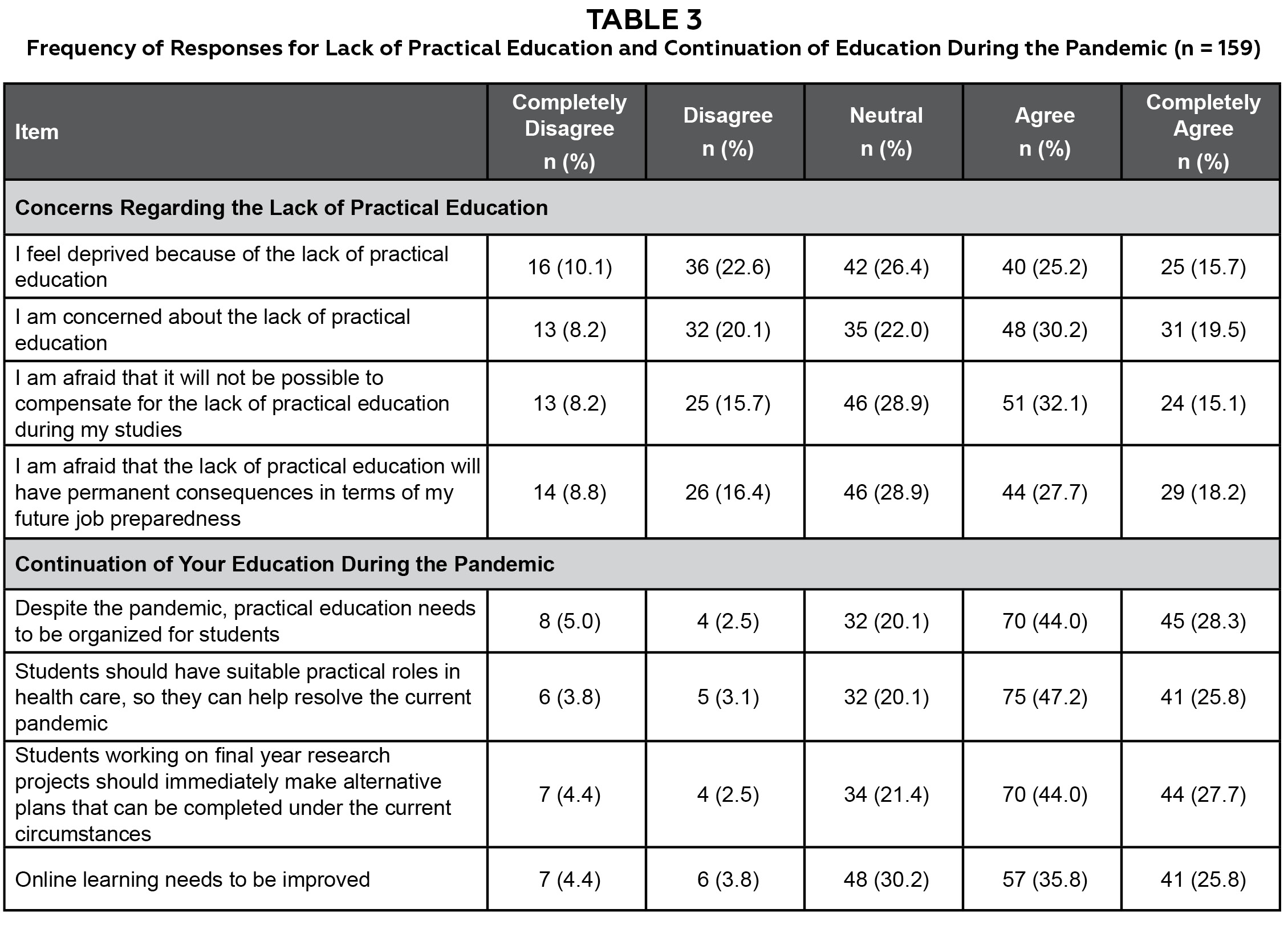 Table 3. Click to enlarge |
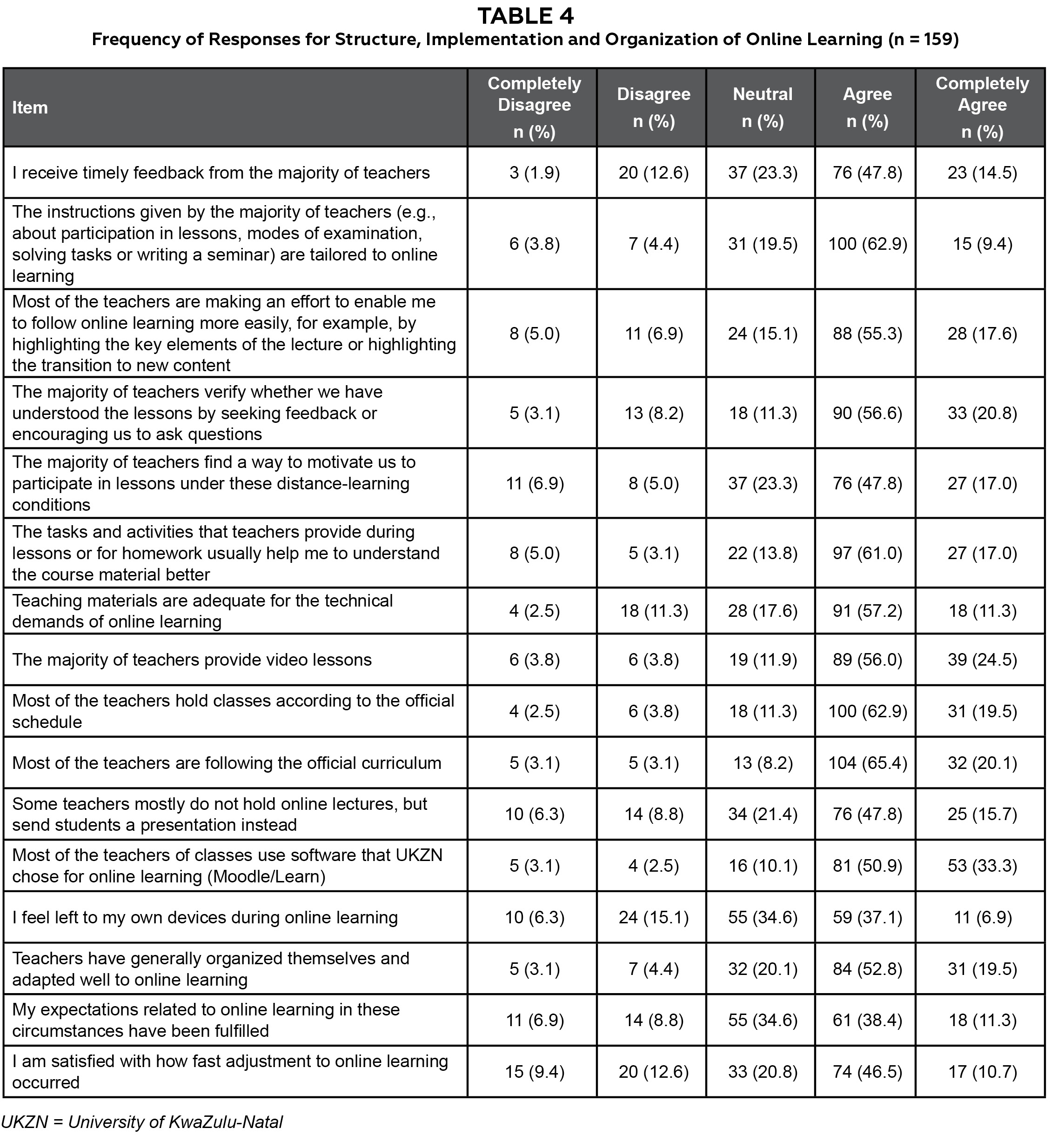 Table 4. Click to enlarge |
Discussion
As a result of the COVID-19 pandemic, changes in teaching and learning practices were implemented by higher education institutions globally, which significantly altered how teachers and students interacted.5 For 2 years, most higher education institutions provided educational activities to students via digital platforms to ensure continuity of academic activities.9,13 Online learning refers to an interactive learning process where materials, activities, discussions and assessments are accessed using online platforms and learning management systems. Furthermore, online learning is student-centered and provides more flexible and accessible opportunities for students to engage with learning materials and activities.9,13,20 Despite these advantages, there are challenges with online learning and an enhanced understanding of students’ experiences and attitudes can be used to strengthen and further develop online learning. As optometry education programs worldwide were affected by the COVID-19 pandemic,21 this study explored the experiences and attitudes of optometry students as such information can be used to improve and better develop the online learning process.
In this study, most participants were equally motivated to participate in and attend online learning when compared with face-to-face learning. Similar results were reported by Schlenz et al. as more than half of their sample of dental students felt motivated to learn using online platforms.5 In contrast, Adnan and Anwar reported that 71.4% of their sample of students in a higher education institution in Pakistan felt that learning in the traditional classroom was more motivating than online learning.16 The mean satisfaction score with online learning was 3.4, and this is higher than the middle point in the Likert scale and the score (2.85) reported in a previous study.20 The results of the present study were encouraging. Despite all participants not being completely satisfied with online learning, they were equally motivated to study using the online method compared with the traditional face-to-face method of learning. These findings could be explained by the desire of optometry students to learn and contribute to their professional development irrespective of the method of learning. Elkins et al. asserted that supporting students with appropriate knowledge and skills for online learning improves their self-efficiency, experiences and satisfaction regarding online learning.22 Therefore, it is possible that optometry students in this study felt motivated to participate in online learning owing to support and interaction from their teachers and institution.20
The findings related to students’ adjustment to and experiences in online learning were interesting. In the present study, more than half of the sample were satisfied with how fast they adjusted to online learning, which is similar to findings in previous studies.6,18 In contrast, undergraduate students in Turkey were dissatisfied with their adaptation to online learning owing to inadequate teacher support and interactions as well as poor learning resources and methods for online learning.20 Similarly, students in an American higher education institution were also dissatisfied with their adaptation to online learning because of poor student-teacher interactions, poor organization of courses, unhelpful learning materials and unrealistic teacher expectations. In the present study, approximately half of the sample reported that they missed face-to-face lessons and in-person communication with teachers during online learning. The finding is important because positive teacher-student interactions promote self-efficacy in students particularly when using blended teaching and flipped-classroom methods that are commonly employed in the online learning process. Consequently, it is recommended that optometry teachers use more effective communication strategies when using online learning platforms to improve student-teacher interactions and compensate for the lack of in-person communication.
In the current study, most students felt that online learning required more time, corroborating results from Coman et al. showing that students felt they had less free time with online learning than with traditional face-to-face learning.13 Different results have been noted in other studies in which students reported that online learning required less time.5,9,20 For example, Thapa et al. reported that 64.7% of their sample of nursing students felt that online learning helped to save time needed for learning.9 Giray noted that their sample of engineering students felt online learning required less travel time and therefore was perceived as more time efficient.20
Most participants would prefer theoretical courses to include online learning in the future, which is consistent with the results noted by Schlenz et al.5 However, Adnan and Anwar reported that although students could effectively manage online learning, 50.8% did not prefer courses to be completed online.16 Similarly, Coman et al. reported that most of their students would prefer future courses using the traditional face-to-face method rather than online learning.13 Most students in the present study felt that online learning could not replace practical sessions and seminars, and this finding is consistent with other studies.6,19 Alsoufi et al. noted that 54.8% of their sample agreed that online learning cannot be used for clinical aspects of medical education.19 This highlights the concern that practical and clinical education, which are more dependent on supervision and mentoring in a skills laboratory and/or clinical setting, have been adversely affected with the use of online learning.6,13 This is because without appropriate simulation and/or patient engagement in a clinical setting, practical and clinical techniques are more difficult to teach using online learning.9 This suggests that online learning has more value for theoretical education rather than practical education particularly in healthcare training undergraduate programs.5,6
More than half of the sample indicated that they had sufficient skills, internet access and computers to participate in online learning. Similar results have been reported by other researchers5,16,19 concerning digital devices and skills that are critical for online learning. For example, Adnan and Anwar noted that most of their participants had adequate access to the internet and proficient computer and information technology skills to engage in online learning.16 In contrast to these results, lack of adequate devices and poor internet connectivity were reported as major challenges to successful engagement in online learning for students in Romania,13 Turkey20 and Nepal.9 The challenge with access to the internet was also highlighted by Pather et al. who found that even though most students (98.8%) had access to digital devices, 15.7% reported that their devices were unable to connect to the internet.12 The difference in findings between the present study and the Pather et al. study12 may be explained by the times at which these studies were undertaken. Pather et al.12 surveyed students very early in the national lockdown period in South Africa. Thus, both students and institutions may have had little time to adjust and prepare for the transition to online learning and/or secure devices and resources needed to engage in online learning. Nevertheless, higher education institutions, particularly those in the developing countries like South Africa, need to consider the digital divide and inequalities in access to digital devices and/or resources for students when planning online learning.12
Many participants in this study felt that UKZN had quickly adapted and organized online learning adequately as well as provided support in the form of training and technical problem-solving services for online learning. Moreover, participants agreed that UKZN had provided timely information regarding the provision of online learning and showed willingness to help students with equipment needed for engaging in online learning. Similar results were reported by Puljak et al. and Etajuri et al. in their studies involving health science students regarding institutional support and adjustment for effective online learning.6,18 In contrast, students in Romania felt that their higher education institutions were inadequately prepared for online learning owing to lack of technical skills, support and platforms needed for optimal online learning processes.13 Thapa et al. noted that students in a higher education institution in Nepal reported poor support from their institution because of inadequate technology and online learning training programs to improve students skills for online learning.9
Almost half of the sample were concerned about the lack of practical education and being unable to compensate for missed practical education. Furthermore, many participants felt that the lack of practical education will have permanent implications for their job preparedness. These findings suggest that students recognize the importance of practical education in undergraduate programs for vocationally oriented professions such as optometry. These findings are expected as both preclinical and clinical education and training are indispensable for the development of future healthcare professionals. Other studies5,6,18 have also reported that future healthcare professionals expressed more concern regarding their practical education when engaging with online learning. Furthermore, nursing students from Nepal felt that reduced patient interactions was perceived as a major disadvantage of online learning.9 Dental students from Malaysia reported that insufficient practical training was a major concern, and almost all students (98.6%) were worried about their levels of preparedness for their clinical competency examinations.6 Other healthcare students also expressed concern about their level of practical preparation during the pandemic and felt uncomfortable about future practice.5 In contrast to these findings, Alsoufi et al. reported that 45.4% of medical students felt that COVID-19 had no impact on their career and future specialty training.19 Most of the students in the study by Alsoufi et al. served as volunteer allied healthcare workers during the pandemic and felt that medical faculty had provided adequate guidance.19 Consequently, students in the study by Alsoufi et al. may have been less affected by the lack of practical training during the pandemic and its implications for future clinical practice.19
When asked about the structure, implementation and organization of online learning, most students in the present study had a positive response. Most participants felt that teachers were organized, held classes according to the schedule, adapted well and gave tailored instructions for online learning. Furthermore, participants reported that teachers provided adequate materials, tasks/activities and feedback and ensured that students were motivated. Similar results were noted in the study by Puljak et al. where students felt that they received timely feedback and that the online learning lectures and activities helped them to understand materials better.18 Schlenz et al. reported that their sample felt they were able to follow the content and that online learning courses were well structured.5 Different results were noted by Coman et al. where one-third of their sample felt that teachers did not follow the schedule as classes did not start or end at the scheduled times.13 Furthermore, Coman et al. noted that teachers did not clearly indicate course requirements, failed to offer support with problems, did not adapt their teaching styles or interact with students in the online environment.13 Elkins et al. reported that most of their students felt that the learning materials provided were unhelpful and did not contribute to their development.22 It is also possible that the teachers being evaluated in the studies by Coman et al. and Elkins et al. did not receive training for online learning or were unable to adequately adapt their teaching styles and courses as the transition to online learning happened unexpectedly and rapidly.13,22 Thus, teachers in these studies13,22 may have been unable to develop technical skills or adapt their courses and/or materials for effective online learning. This is different than the present study where teachers at UKZN were provided with training workshops and support services for adjusting and implementing online learning.
When comparing traditional face-to-face learning with online learning, only 32.1% of participants reported that online learning was better. Furthermore, 61.6% of participants agreed that online learning needs to be improved for the continuation of education during the pandemic. Possible reasons for this may be that optometry students may be more familiar with traditional face-to-face learning and in-person contact with their teachers and/or patients in clinical/skills laboratory settings. Other studies involving health science students9,18 have reported similar findings regarding the comparison of online and traditional learning. For example, Puljak et al. noted that only 39.6% of their sample found online learning better than traditional learning.18 Thapa et al. reported that only 34% of their sample felt that online learning was as effective as traditional learning with the majority preferring traditional face-to-face learning.9 Even students in non-health science programs perceived that traditional face-to-face learning was better than online learning.20 The lack of satisfaction with online learning, the low proportion of students perceiving online learning to be better than traditional face-to-face learning and majority of students perceiving that online learning needs to be improved is concerning as higher satisfaction is related to better academic performance and increased motivation as students need to self-regulate their learning and motivation particularly in online learning.18 Furthermore, the development and incorporation of technology into education has revolutionized the teaching and learning process and is likely going to remain in optometry education programs in the post COVID-19 era.9,21 Consequently, future studies should use qualitative research designs and data collection methods to explore reasons for the low proportion of optometry students perceiving that online learning is better than traditional face-to-face learning. These studies should also focus on better understanding students’ perceptions of online learning needing to be improved and possibly explore suggestions and recommendations on how this can be achieved.
Strengths of this study included that the experiences and attitudes of optometry students after engaging with online learning for approximately 1 year were investigated. Overall, the response rate was relatively good and thus may be representative of the experiences and attitudes of optometry students regarding online learning at UKZN. Participants responded to the questionnaire anonymously, and all students could access the questionnaire during the study period using either data provided by the institution or personal data. The questionnaire was adapted from a previous study18 that assessed student perceptions regarding online learning and was piloted prior to data collection. As the sample only included optometry students from one institution, the study findings may not be generalized to other student populations. Thus, it would be useful to extend the study to the three other institutions in South Africa that train optometry students to better understand the experiences of these students and make comparisons across the institutions. Future longitudinal studies would also be useful to assess how optometry students have adapted to online learning and if their experiences and/or attitudes regarding online learning change over time.
Conclusion
This study investigated the experiences and attitudes of optometry students regarding online learning during the COVID-19 pandemic. Findings showed that a majority of participants were satisfied with their adjustment to online learning and the way it was implemented by the institution and their teachers. Challenges with the lack of practical education, particularly in a vocationally oriented program like optometry, is concerning and should be addressed using supplementary programs to enhance practical and clinical competencies. The use of blended learning approaches in optometry education programs has the potential to enhance the learning process for optometry students. Consequently, this information should be used by optometry curriculum developers and educators to strengthen online learning together with face-to-face learning to achieve better outcomes and have a more positive impact on student learning. Such changes would be critical for a robust optometry curriculum particularly if online learning continues effectively in the post COVID-19 era for the training of future optometrists who are fit for purpose.
References
- Hu B, Guo H, Zhou P, Shi Z-L. Characteristics of SARS-CoV-2 and COVID-19. Nat Rev Microbiol. 2021;19(3):141-54. doi: 10.1038/s41579-020-00459-7
- Cucinotta D, Vanelli M. WHO Declares COVID-19 a pandemic. Acta Biomed. 2020;91(1):157-60. doi: 10.23750/abm.v91i1.9397
- Planas D, Veyer D, Baidaliuk A, et al. Reduced sensitivity of SARS-CoV-2 variant Delta to antibody neutralization. Nature. 2021;596(7871):276-80. doi: 10.1038/s41586-021-03777-9
- Worldometer Coronavirus [Internet]. Dover, DE: Worldometers.info; [cited 2023 July 10]. Available from: https://www.worldometers.info/coronavirus/?
- Schlenz MA, Schmidt A, Wöstmann B, Krämer N, Schulz-Weidner N. Students’ and lecturers’ perspective on the implementation of online learning in dental education due to SARS-CoV-2 (COVID-19): a cross-sectional study. BMC Med Educ. 2020;20(1):354. doi: 10.1186/s12909-020-02266-3
- Etajuri EA, Mohd NR, Naimie Z, Ahmad NA. Undergraduate dental students’ perspective of online learning and their physical and mental health during COVID-19 pandemic. PLoS One. 2022;17(6):e0270091. doi: 10.1371/journal.pone.0270091
- Dubey S, Biswas P, Ghosh R, et al. Psychosocial impact of COVID-19. Diabetes Metab Syndr. 2020 Sep-Oct;14(5):779-788. doi: 10.1016/j.dsx.2020.05.035
- Farnell T, Skledar Matijević A, Šćukanec Schmidt N. The Impact of COVID-19 on Higher Education – a Review of Emerging Evidence: Analytical Report, 2021 [Internet]. European Commission, Directorate-General for Education, Youth, Sport and Culture; c2021 [cited [2021 Oct 25]. Available from: https://data.europa.eu/doi/10.2766/069216
- Thapa P, Bhandari SL, Pathak S. Nursing students’ attitude on the practice of e-learning: a cross-sectional survey amid COVID-19 in Nepal. PLoS One. 2021 Jun 24;16(6):e0253651. doi: 10.1371/journal.pone.0253651
- Learners in South Africa Up to One School Year Behind Where They Should Be, July 22, 2021 [Internet]. UNICEF [cited 2021 Oct 25]. Available from: https://www.unicef.org/press-releases/learners-south-africa-one-school-year-behind-where-they-should-be
- Landa N, Zhou S, Marongwe N. Education in emergencies: Lessons from COVID-19 in South Africa. Int Rev Educ. 2021;67(1):167-83. doi: 10.1007/s11159-021-09903-z
- Pather S, Booi E, Pather S. An Assessment of Student Resource Readiness for Online Learning During Covid-19: a South African Case Study. 13th annual International Conference of Education, Research and Innovation, Nov 2020 online conference. ICERI2020 Proceedings: p 9753-9762. doi: 10.21125/iceri.2020.2186
- Coman C, Țîru L, Meseșan-Schmitz L, Stanciu C, Bularca M. Online teaching and learning in higher education during the coronavirus pandemic: students’ perspective. Sustainability. 2020;12(24):10367. doi: 10.3390/su122410367
- Cuisia-Villanueva MC, Núñez JL. A study on the impact of socioeconomic status on emergency electronic learning during the coronavirus lockdown. FDLA Journal. 2021;6(6):1-17.
- Sharma K, Deo G, Timalsina S, Joshi A, Shrestha N, Neupane HC . Online learning in the face of COVID-19 pandemic: assessment of students’ satisfaction at Chitwan Medical College of Nepal. Kathmandu Univ Med J (KUMJ). 2020 COVID-19 SPECIAL ISSUE;18(70):40-47.
- Adnan M, Anwar K. Online learning amid the COVID-19 pandemic: students’ perspectives. Journal of Pedagogical Sociology and Psychology. 2020;2(1):45-51. doi: 10.33902/JPSP. 2020261309
- Maqableh M, Alia M. Evaluation online learning of undergraduate students under lockdown amidst COVID-19 Pandemic: The online learning experience and students’ satisfaction. Child Youth Serv Rev. 2021 Sep;128:106160. doi: 10.1016/j.childyouth.2021.106160
- Puljak L, Čivljak M, Haramina A, et al. Attitudes and concerns of undergraduate university health sciences students in Croatia regarding complete switch to e-learning during COVID-19 pandemic: a survey. BMC Med Educ. 2020 Nov 10;20(1):416. doi: 10.1186/s12909-020-02343-7
- Alsoufi A, Alsuyihili A, Msherghi A, et al. Impact of the COVID-19 pandemic on medical education: Medical students’ knowledge, attitudes, and practices regarding electronic learning. PLoS One. 2020 Nov 25;15(11):e0242905. doi: 10.1371/journal.pone.0242905
- Giray G. An assessment of student satisfaction with e-learning: An empirical study with computer and software engineering undergraduate students in Turkey under pandemic conditions. Educ Inf Technol. 2021;26(6):6651-73. doi: 10.1007/s10639-021-10454-x
- R Ramani KK, Hussaindeen JR. Optometric education in the post-COVID-19 era: a time of forced change! Indian J Ophthalmol. 2021 Mar;69(3):746-750. doi: 10.4103/ijo.IJO_2820_20
- Elkins R, McDade R. Student perception of online learning experiences associated with covid-19. Res Directs Health Sci. 2021;1(1). doi: doi:10.53520/rdhs2021.10419
Appendix A. Click to enlarge