PEER REVIEWED
The Impact of Study and Time Management Skills Workshops on First-Year Optometry Students
Samantha Rice, OD, FAAO
Abstract
Study and time management skills are crucial to student success in health professions education. This paper outlines a three-part workshop series for incoming optometry students to help improve these skills. The series reviews several topics, including active study techniques, time management, notetaking, metacognition, fixed vs. growth mindset, and more. When participants were surveyed about the program, they reported that they felt their study skills had improved. They also approved of the format and timing of the program, which suggests that incorporation of a study skills program into orientation may be beneficial for students as they begin optometry school.
Keywords
Background
The transition to optometry school is a challenge for many students. The curriculum is generally more fast-paced and content-heavy compared to undergraduate programs. Students often enter optometry school with an understanding that the courses may be more difficult than their previous coursework and their study methods may not be as effective.1 For many students, this difficulty to adapt to graduate-level work became especially pronounced in the years following the COVID-19 pandemic. During the pandemic, many undergraduate courses switched from in-person, letter grade courses to online courses that were pass/fail. 2-4 When these students returned to in-person learning, they often exhibited deficits in their critical thinking and time management skills.5
To help incoming first-year students, the Midwestern University Chicago College of Optometry (CCO) collaborated with the university’s Student Services-Academic Support department to develop the Study and Time Management Strategies workshop series. The workshops began in the fall of 2022 and have been held every fall quarter since. The workshop series is designed to help incoming first-year optometry students develop the skills they need to be successful in optometry school – including topics such as active study techniques, time management, making effective use of lecture time, metacognition, fixed vs. growth mindset and others. There have been updates to the program each year, and student feedback has been positive, with most students noting improved confidence in their study skills.
The program focuses on study and time management strategies because effective study skills and academic aptitude are two of the most important factors affecting success in graduate health programs. Academic aptitude is measured by standardized admissions tests and undergraduate GPA, both of which are completed before entering graduate school. In 2013, a study analyzed which factors best predict students’ performance in optometry school: overall OAT (Optometry Admission Test) scores, reading comprehension scores and undergraduate GPA scores were the strongest predictors of success.6 Studies in medical school have shown similar results, showing that MCAT scores and undergraduate GPA are predictive of students’ performance.7-9
However, academic aptitude is not the sole predictor of academic success. Effective study skills also contribute to academic performance in graduate health programs, and these skills can be improved over time. A study by West and Sadoski10 showed that effective time management and self-testing were more predictive of academic success than any aptitude measurement. Other studies have evaluated various study strategies among medical school students, with specific study strategies like spaced repetition, practice questions, creating one’s own study notes and time management being shown as particularly effective techniques for succeeding in medical school.11-12
While there are many ways to effectively study for optometry school, this workshop series highlights some specific study and learning strategies. Among those featured are learning by teaching, metacognition and active recall. Studies have shown that medical students who teach others often improve their cognitive complexity and communication skills and become better learners themselves.13-14 Metacognition helps students plan, monitor their study strategies, and self-regulate, all of which are crucial for effective learning.15-16 Finally, the series also emphasizes the importance of active recall, which has been shown to improve students’ ability to not only recall, but retrieve learned information.17
The Study and Time Management Strategies workshop series was designed with these research results in mind, and was presented as an interactive, engaging three-part series that highlights best practices in study skills to assist students as they begin their time in optometry school. The purpose of this publication is to outline the program and students’ feedback on its format, timing and effectiveness.
Methods
In 2022, CCO created the Study and Time Management Strategies workshop series. In that first year, there were five workshops in the series, and they spanned the first half of fall quarter for the first-year optometry students. Based on student feedback, the workshops were condensed into three 2-hour workshops and moved to orientation week. The current workshop series is outlined below.
Pre-Workshop Assignment
Before the Study and Time Management Strategies workshops, incoming students complete a survey in which they self-reflect on their strengths and weaknesses as students. During the first two years of the program, students completed a survey that was created at CCO. Beginning in 2024, students completed the Learning and Study Strategies Inventory (LASSI), a research-based assessment of students’ study skills and use of academic resources.
Session 1 – Transitioning to Grad School
The first session of the series has three main sections: metacognition, goal creation and hands-on practice with several study techniques. Metacognition is defined, and examples are provided of how this form of self-reflection can be useful in a graduate program, especially if a student is not performing as well as they expected. Next, the program reviews the importance of creating SMART goals that are specific, measurable, attainable, relevant and time-based.
Once the students have reviewed the importance of reflecting on one’s performance and making plans for improvement, various study strategies are introduced, and optometry-specific examples are given. These strategies include active engagement, self-testing, learning by teaching, mnemonics, chunking and spacing.
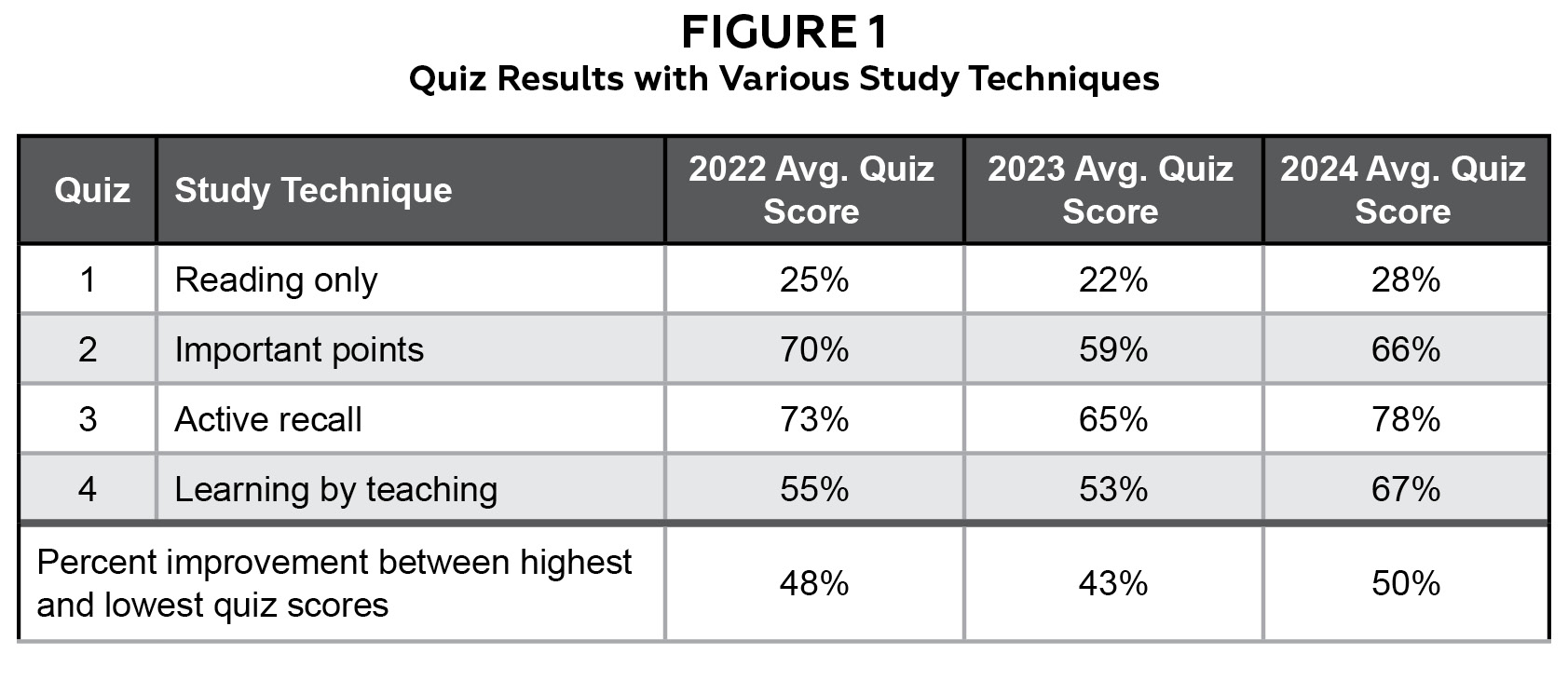
Figure 1: Quiz Results with Various Study Technologies. Click to enlarge
Students read four short excerpts from optometric textbooks, employ one of the study techniques that are discussed, then take a brief quiz to evaluate how well that study strategy worked for them. With the first reading, the students read the passage once, then complete the quiz. Unsurprisingly, this approach has always resulted in the worst quiz outcomes. With the second reading, students are instructed to stop after each subsection in the passage and write down the one or two most important points, then write down what is still confusing at the end of the excerpt. With the third reading, they practice active recall and self-testing. With the fourth reading, students practice learning by teaching. They read the full passage, then pair up with another student and take turns explaining the material to each other before completing the final quiz. All quizzes are completed on Canvas, and results are shared with the students immediately. The quiz scores from all four study strategies are shown in Figure 1. As evidenced by the quiz scores, students retain material much better when using one of the active learning techniques.
The first workshop concludes with a self-reflection activity in which students create two goals for the quarter and plan two specific steps they can take in the next week to help reach those goals.
Session 2 – Time Management
The second session is dedicated to time management and creating a study schedule. Students are given a five-step process to create a study schedule:
- Identify obstacles
- Perform a self-assessment of when and how they learn best
- Complete individual course assessments to account for various deadlines, due dates, exams and quantity of course material
- Evaluate their available time
- Create a schedule
Once students have reviewed the general process for creating a schedule, they are introduced to two types of study schedules – the “to-do list study schedule” and the “hourly study schedule.” The to-do list study schedule takes a wider view of a student’s time and tasks. It is action-item oriented and lists all activities that must be completed by a specific deadline (end of the day, end of the week, etc.). Students identify the times during the week they have available for study, then they fill those times with the various tasks they have listed. By contrast, the hourly study schedule is more detailed, and students assign a course/topic to each available study hour.
At this point in the session, students are provided with their course schedule for the first 2 weeks of class and asked to make a study schedule around those commitments. Once they have had an opportunity to create their own schedules, they are discussed as a group. Students evaluate their schedules to see if they divided their time appropriately for their various classes, and if they allotted enough time for study and other non-academic activities in the week. They discuss the importance of self-reflection and adjust their study schedules as needed. At this time, the instructor also discusses tips for utilizing AI to create a study schedule.
This session concludes with a discussion of one of the biggest barriers to time management – procrastination. Students complete a procrastination quiz to identify their own downfalls in this area, and they watch a TED talk about procrastination and how it can be detrimental to the achievement of one’s long-term goals.
Session 3 – Effective Use of Lecture Time & Notetaking, Test-taking Strategies & The Importance of Mindset
The final session of the series is divided into several subsections – effective use of lecture time and notetaking, test-taking strategies, the importance of mindset and an advice panel with second-year students.
Students entering optometry school have already completed several years of higher education, but they often struggle with how to best utilize their time during lecture and how to create their own study materials after class. In this part of the workshop, they review best practices for before, during and after lecture time. These include pre-reading, taking notes and actively participating during class, and creating their own condensed notes after class. As part of this section, students are provided with several examples of optometry-specific notes from previous students and then are given time to create their own chart/diagram of a basic science topic.
In the second section of this workshop, students review test-taking strategies. Many incoming students self-identify as poor test takers, and this portion is designed to improve their confidence when taking exams in optometry school. It begins with the importance of fully reading the question and highlighting key words, then reviews strategies to increase confidence in their answer choices and how to make an educated guess. This section also reviews how to best approach multiple response questions and clinical cases, as they will encounter many of those during their time in optometry school. Students are then shown several optometric exam questions, and they walk through how to utilize these strategies on real questions. Finally, this section concludes with advice from the Midwestern University Counseling Center on how to combat test anxiety both before and during an exam.
The next presentation in the workshop series focuses on the importance of a growth mindset. In a fixed mindset, students believe that they have fixed characteristics that cannot be altered. For example, they are poor test takers or are bad at math. In a growth mindset, students understand that challenges are an opportunity for growth. They recognize that failure to understand a concept or perform well on an exam is not a fixed characteristic, but merely an indication that they have not yet mastered that material.
The workshop concludes with an advice panel from second-year students who were selected based on their ability to maintain good grades while balancing the demands of student leadership and service. These students share their experiences from first year, what they wished they had done differently, and their advice for success.
Post-Course Survey
At the conclusion of the workshop series, students complete a survey evaluating the course, their own study skills, and what strategies they plan to take away from the course. Students could either include their names on the survey or complete it anonymously.
Results
At the end of the last workshop in the series, students were given an optional post-course survey. In 2024, 65 of the 65 first-year students (100%) completed the survey. Forty-nine students included their names with their responses, and 16 completed it anonymously.
The response to the workshop series was overwhelmingly positive. When evaluating the impact of the workshops on their study skills, 95% of students agreed or strongly agreed with the statement “This course was helpful in developing my time management and study skills.” Eighty percent felt they were comfortable making and following a study schedule, 100% planned to employ multiple techniques when studying, 78.5% felt more confident in their test-taking abilities, and 95% agreed or strongly agreed with the statement “I will make changes to my study and time management habits after taking this course.”
Students were also asked to evaluate the workshop series itself. Ninety-five percent of students felt the sessions were organized in a smooth and logical fashion, 86% felt it was appropriate to hold these workshops during orientation, and 98% agreed that they were able to understand what they were supposed to get out of the program. Ninety-five percent of respondents agreed or strongly agreed with the statement “Overall, this series was helpful to me as a new CCO student.” The full responses to these survey questions can be found in Figure 2.
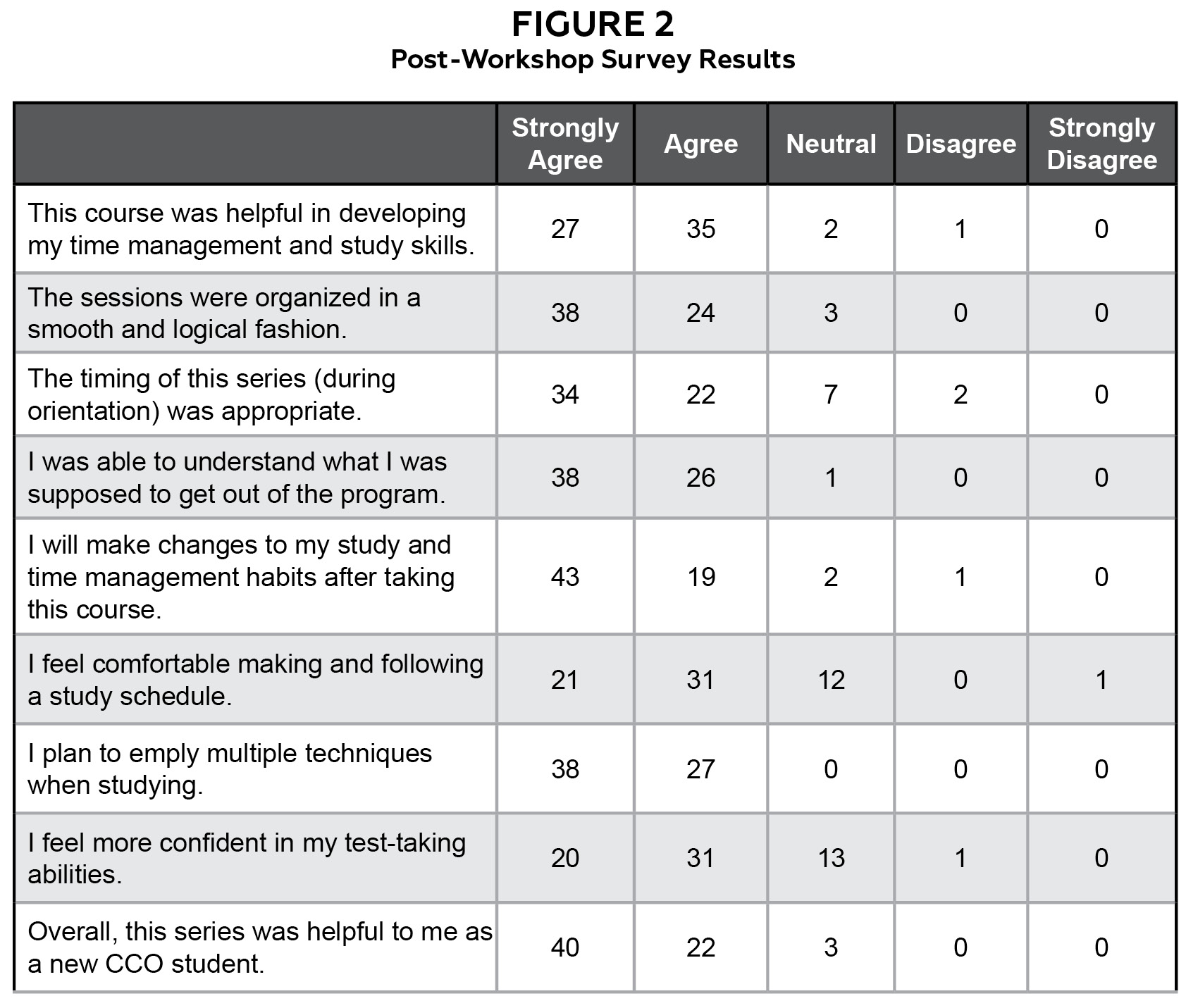
Figure 2. Post-Workshop Survey Results. Click to enlarge
In addition to evaluating the course, students were also asked to reflect on their own study skills. When students were asked to rank their study skills before taking the course, 13.8% reported that their skills were excellent or very good, 38.5% described their skills as good, and 47.7% described their study skills as fair or poor. When students were asked to rate their study skills after completing the workshop series, they felt that their study skills had improved dramatically. Over half (53.8%) described their study skills as excellent or very good, 41.5% described them as good, and only 4.6% ranked their study skills as fair or poor. These results can be seen in Figure 3.
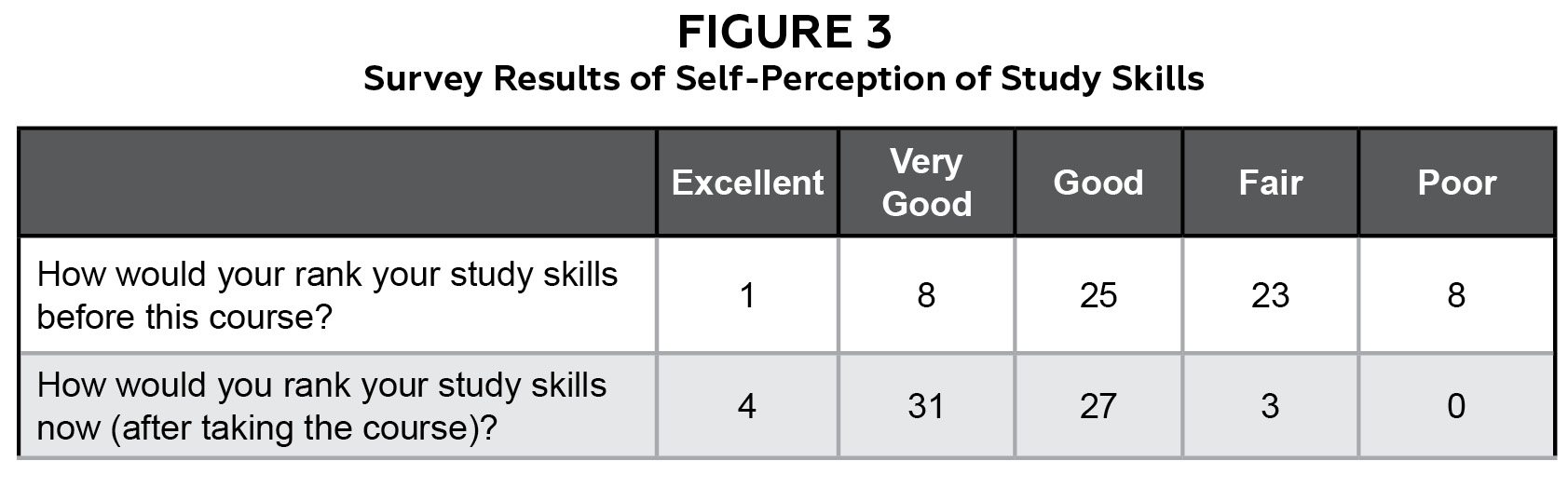
Figure 3. Survey Results of Self-Perception of Study Skills. Click to enlarge
Discussion
Student feedback about the Study and Time Management Strategies workshop series was largely positive, with many students reporting an improvement in their self-perceived study skills. The students also appreciated the timing and organization of the series, which suggests that there is value in incorporating an interactive academic skills workshop during orientation, when students have both the time and the motivation to fully participate and learn. In previous years, when the workshop series extended into the first few weeks of the quarter, there was feedback from students to move this program earlier in the quarter. Not only did they prefer to learn these skills before classes began, but they also felt that they had the time and energy to focus on the workshops.
There are many study strategies classes and workshops offered either directly by health sciences graduate programs or through outside entities.18-21 While several of these programs have been described in the literature, this is the first publication outlining a workshop series designed specifically for optometry students. The series was a collaboration between the CCO dean’s office and the MWU Office of Academic Support. As such, it incorporated both general study and time management tips and real-world applications to optometric material. By focusing the content on optometry-specific topics and examples, the workshop not only gave students examples of what was to come in the following months and years of optometry school but also specific guidance on how to overcome challenges that they are likely to face.
Two of the major challenges in evaluating this workshop series are the multifactorial nature of study behaviors and student achievement and the fact that the workshop series has changed in content and timing during its first few years. An analysis22 of the 2022 post-session survey was compared to student performance on a retention exam given at the start of their second year in 2023. That analysis demonstrated that students were most adept at identifying their areas of weakness, with a significant correlation between retention exam results and students’ responses to survey items asking them to identify their poor study habits. However, this analysis compares an earlier version of the workshop, which included more sessions and was given later in the year. In the future, the plan is to continue this analysis with the current workshop format to assess the long-term impact on student retention and learning. Other limitations include that this survey is representative of only one cohort of students from one optometry school. The response to the workshop series may be different with a different population of students.
Conclusion
First-year students reported that the incorporation of a study and time management skills workshop series into orientation had a positive effect on their study habits. This publication describes a workshop series that is interactive and involves hands-on experience with actual study techniques, time management and test-taking skills that directly relate to the upcoming optometric curriculum. Study skills are an important predictor of graduate school performance10 and providing proactive support and guidance may be helpful as students begin their time in optometry school.
Acknowledgements
The author would like to acknowledge Danielle Bank, MEd, for her contributions to the development and presentation of these workshops.
References
- McGinley B, Carlson N, Hoppe E. What were they thinking? Surveying study practices of entering students. Optom Educ. 2008;33(2):59-63.
- Mostafa SA, Ferguson R, Tang G, Ashqer M. An analysis of the COVID-19-induced flexible grading policy at a public university. High Educ Policy. 2023 May;20:1-34. DOI: 10.1057/s41307-023-00315-2
- National Center for Education Statistics: Undergraduate Enrollment, Condition of Education [Internet]. Washington, DC: US Department of Education, Institute of Education Sciences; c2023 [cited 2025 Feb 22]. Available from: https://nces.ed.gov/programs/coe/indicator/cha.
- Rakes GC, Dunn KE. The impact of online graduate students’ motivation and self-regulation on academic procrastination. J Interact Online Learn. 2010;9(1):78-93.
- Becker TB, Fenton JI, Nikolai M, et al. The impact of COVID-19 on student learning during the transition from remote to in-person learning: using mind mapping to identify and address faculty concerns. Adv Physiol Educ. 2022 Dec 1;46(4):742-751. DOI: 10.1152/advan.00079.2022
- Buckingham RS, Bush SR. Predictors of academic success for students at the Michigan College of Optometry. Optom Educ. 2013 Summer;38(3):92-99.
- Donnon T, Paolucci EO, Violato C. The predictive validity of the MCAT for medical school performance and medical board licensing examinations: a meta-analysis of the published research. Acad Med. 2007 Jan;82(1):100-106. DOI: 10.1097/01.ACM.0000249878.25186.b7
- Evans P, Wen FK. Does the medical college admission test predict global academic performance in osteopathic medical school? J Am Osteopath Assoc. 2007 Apr;107(4):157-162.
- Silver B, Hodgson CS. Evaluating GPAs and MCAT scores as predictors of NBME I and clerkship performances based on students’ data from one undergraduate institution. Acad Med. 1997 May;72(5):394-396. DOI: 10.1097/00001888-199705000-00022
- West C, Sadoski M. Do study strategies predict academic performance in medical school? Med Educ. 2011 Jul;45(7):696-703. DOI: 10.1111/j.1365-2923.2011.03929.x
- Sleight DA, Mavis BE. Study skills and academic performance among second-year medical students in problem-based learning. Med Educ Online. 2006 Dec; 11(1). DOI: 10.3402/meo.v11i.4599
- Morey G, Morey VC, Gruman T, Al-Khayat T. A literature review on optimizing study strategies in medical education: insights from exam scores and study resources. Cureus. 2024 Nov 19;16(11):374034. DOI: 10.7759/cureus.74034
- Dandavino M, Snell L, Wiseman J. Why medical student should learn how to teach. Med Teach. 2007 Sep;29(6):558-565. DOI: 10.1080/01421590701477449
- Heys KH, Wawrzynski MR. Male peer educators: effects of participation as peer educators on college men. J Stud Aff Res Pract. 2013; 50(2):189-207. DOI:1515/jsarp-2013-0014
- Medina MS, Castleberry AN, Persky AM. Strategies for improving learner metacognition in health profession education. Am J Pharm Educ. 2017 May; 81(4): 78. DOI: 10.5688/ajpe81478
- Dunlosky J, Thiede KW. What makes people study more? An evaluation of factors that affect self-paced study. Acta Psychol (Amst). 1998 Mar; 98(1):37-56. DOI: 10.1016/s0001-6918(97)00051-6
- Roediger H, Butler AC. The critical role of retrieval practice in long-term retention. Trends Cogn Sci. 2011 Jan;15(1):20-7. DOI: 10.1016/j.tics.2010.09.003
- Nyland RL, Sawarynski KE. Setting students up for success: a short interactive workshop designed to increase effective study habits. MedEdPORTAL. 2018 Jul 26;13:10610. DOI: 10.15766/mep_2374-8265.10610
- Workshops and Seminars [Internet]. Tallahassee: Florida State University, College of Medicine [cited 2025 Feb 25]. Available from: https://med.fsu.edu/facultydevelopment/workshop-list
- Academic Success Resources [Internet]. Cincinnati: University of Cincinnati, College of Medicine [cited 2025 Feb 25]. Available from: https://www.med.uc.edu/education/medical-student-education/student-affairs/academic-support/programs/academic-success
- Sisa I, Garcés MS, Crespo-Andrade C, Tobar C. Improving learning and study strategies in undergraduate medical students: a pre-post study. Healthcare (Basel). 2023 Jan 28;11(3):375. DOI: 10.3390/healthcare11030375
- Rice S. Student self-assessment of study skills & long-term material retention. Poster session presented at: American Academy of Optometry; 2024 Nov 6-9. Indianapolis, IN.