PEER REVIEWED
A review of the educational value of the Joint Executive Certificate Program – Southern California College of Optometry/Marshall B Ketchum University and Tokyo Optometric College
John Lee OD, Patrick Yoshinaga OD, MPH, Eunice Myung Lee, OD, John Nishimoto OD, MBA, Andrew Loc Nguyen PhD
Abstract
In response to the growing global need for eye care, the executive certificate program offered by Southern California College of Optometry, Marshall B. Ketchum University (MBKU) and the Tokyo Optometric College (TOC) was created as an international collaboration to further the knowledge and introduce the optometric scope of practice outside of North America. MBKU faculty taught didactic courses delivered online and traveled to Japan to guide in-person hands-on laboratory experiences. Surveys were sent to alumni of the program to review the results of the program. Results showed effectiveness in fostering growth in eye care knowledge through this program and potential for future training programs in other countries to enhance scope of practice of international opticians and optometrists.
Keywords
Introduction
The executive certificate program offered by Southern California College of Optometry, Marshall B. Ketchum University (MBKU) and the Tokyo Optometric College (TOC) was a collaboration between the two programs to meet the future needs of patients in Japan. With a rapidly aging population, there was a growing demand for access to proper eye care in a timely manner.1,2 This program was also developed to help strengthen the drive to create a uniform national Japanese optician license which Japan lacked compared to other Asian countries at that time. This helped standardize the requirements to become an optician and ensure that patients would receive the highest care possible. In addition, this program was designed to showcase the scope of practice that American and Canadian optometrists enjoyed compared to colleagues in Japan as a possible future evolution of the profession. The aim of this paper is to highlight and share knowledge of a successful collaboration between international optometric/optician programs to foster growth in this field and provide resources to expand the profession of optometry in other countries.
In Japan there were three levels of eyecare professionals: ophthalmologists, orthoptists and certified optical eyeglass manufacturing technicians (opticians). Ophthalmologists were medical doctors providing medical and surgical eye care. Orthoptists worked alongside ophthalmologists, performing a wide range of procedures including visual fields, imaging, follow-ups and low vision care. Orthoptists needed to complete a training program and pass a national exam to be recognized. According to the Japanese Association of Certified Orthoptist, as of 2019 there were 10 universities, one junior college and 18 training colleges providing the required training program that was a prerequisite to sit for the national exam. There were 16,171 certified orthoptists in Japan.3 As of April 2024, however, there were nine universities, one junior college and 17 training colleges providing the required training program. There were approximately 20,000 certified orthoptists. There was a decrease in the number of training programs during those 5 years, demonstrating little interest in expanding the field.
Opticians, or certified optical eyeglass manufacturing technicians, became a designated occupation in 2021 by Japan’s Ministry of Health, Labor and Welfare, requiring a licensing certification exam. Before then, it was not classified by the government. According to the All Japan Optometric and Optical Association, optical eyeglass manufacturing technicians conducted “tests on tasks such as visual acuity measurement, lens processing and frame fitting that are performed at optical stores.”4 Licensure required a written test and a practical exam. Passing both parts awarded the title of “Eyeglass Manufacturing Technician”, first grade or second grade, depending on the results.
Optometry, as a term in Japan, was much more nebulous to define. Optometry, as defined in American (US) and Canadian scopes of practice, did not exist in Japan. In 1966 Greenspoon noted that although there were no optometrists, there were opticians and refracting opticians.5 At the time, there were no laws controlling the eyecare professions. He stated that out of approximately 12,000 opticians, about 1,000 refracted. Nearly 30 years later, Kimbara explained that there was a growing movement in Japan to provide optometric education and qualifying examinations comparable to international standards.6 Lastly, in 1986 and 2003 respectively, Bailey and Bailey and Hayashi documented similar findings over a period of years.7,8 There is a growing global demand for eye care provided by optometrists to prevent blindness.9 However, since 2003, there has been little evidence in literature discussing the need specifically in Japan. Despite that, with a growing need for eye care and a decrease in training programs for orthoptists, opticians or certified optical eyeglass manufacturing technicians, programs will eventually need to provide for this shortfall.
The learning objective of the executive certificate program was to increase the knowledge of the students by introducing topics not covered in the Japanese opticianry program and potentially expand their career potential by initiating growth in the industry to medical eye care. Meetings were initiated at the Asia Pacific Optometric Congress in 2013. In partnership with TOC Chairman of the Board Ikuzo Okamoto, a University of California, Berkeley graduate, MBKU President Kevin Alexander OD, PhD initiated the executive certificate program.
The 2-year program consisted of 11 courses and four laboratories (Table 1) split between two 24-week semesters per year. Each lecture credit hour consisted of 50 minutes of material delivered in lecture format. Each lab credit hour consisted of 60 minutes of hands-on, in-person workshop training on equipment and optometric techniques. The program had a total of 122 credit hours, of which 74 hours were lecture-based and 48 hours lab-based.
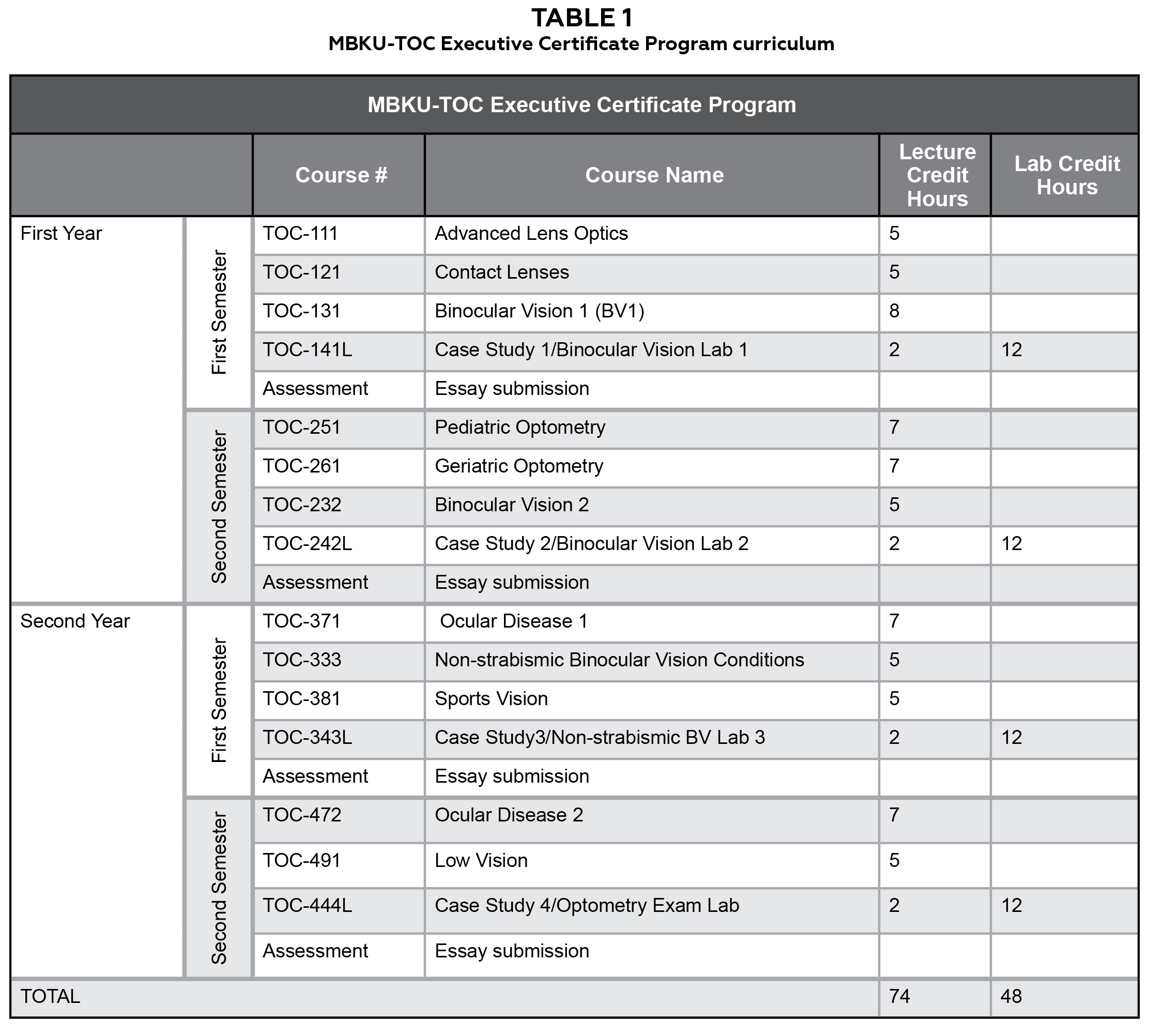
Table 1. MBKU-TOC Executive Certificate Program curriculum. Click to enlarge
The topics chosen comprised of up-to-date contemporary optometric material not taught or emphasized in Japanese optician curriculum but taught in an accredited optometry degree program in the US or Canada. Each course was prerecorded by select MBKU faculty specializing in a particular area of study. Lectures were transcribed in English then translated and transcribed into Japanese by the two designated TOC executive certificate faculty members. The two designated TOC executive certificate faculty members were fluent in both English and Japanese as well as graduates of accredited American colleges or universities of optometry. Japanese subtitles were embedded into the lectures. Each topic within a lecture course included multiple choice assessments, written by the MBKU faculty and translated into Japanese, that students would take to demonstrate comprehension of the material.
The lectures were made available to the registered students, at the beginning of the requisite semester, through the learning management software, Moodle. The students were able to learn the material asynchronously and at their own pace. Course material and assessments needed to be completed by the end of the semester to move on to the next. All students in a particular cohort began and ended each semester at the same time.
Interested students were enrolled in the program through TOC. Recruitment came from word of mouth to alumni, outreach to independent optical shops and support from corporate optical chains. Enrolled students came from throughout Japan. Didactic material in lecture courses was provided online and the students accessed the coursework through Moodle. Students were from differing backgrounds; some were concurrent students at TOC. Others were opticians working in optical shops with varying degrees of experience, from newly graduated to decades of working. A few students were professors at TOC. Class sizes varied from eight to 30 in different cohort years.
Every student was required to attend a 2-day in-person 12 hour laboratory each semester, provided on the TOC campus. Each laboratory emphasized a different topic. (Table 2)
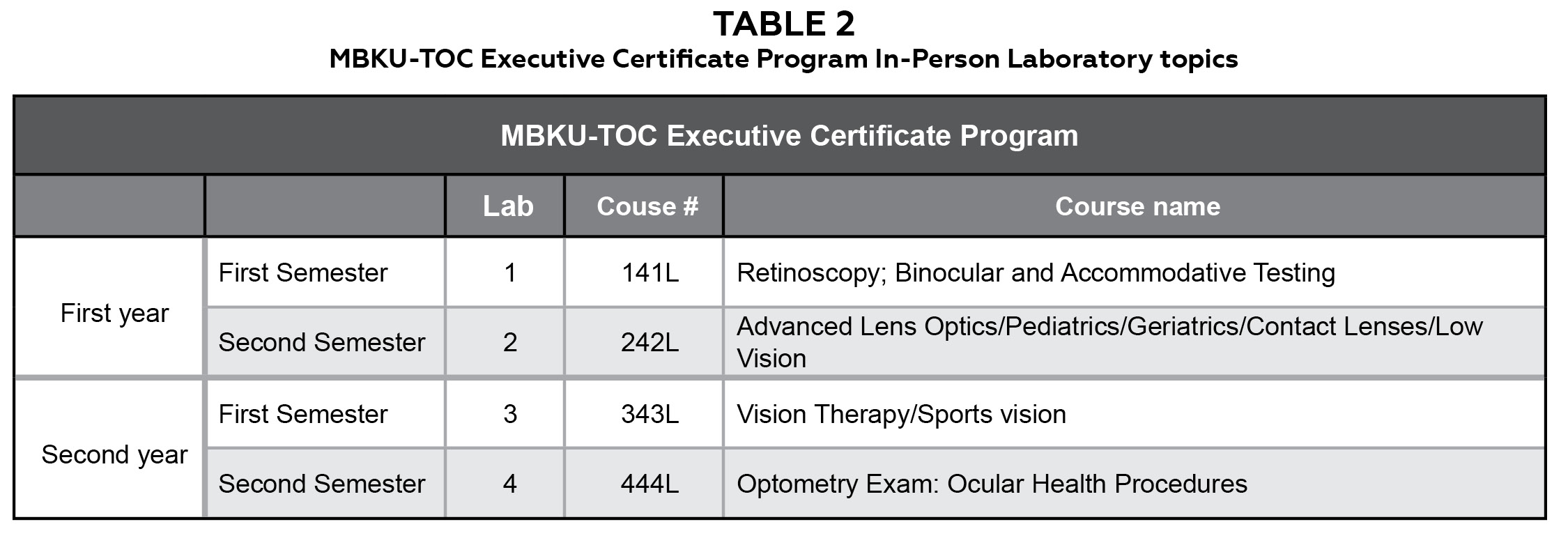
Table 2. MBKU-TOC Executive Certificate Program In-Person Laboratory topics. Click to enlarge
MBKU faculty members traveled to Japan to teach each of the four laboratories in person at TOC. The MBKU professors taught the labs in English while TOC executive certificate program professors Hayashi and Kimbara provided live translation of the lesson into Japanese. Students had varying levels of English proficiency, from none to semi-conversational. Students also had varying levels of previous knowledge and skill in the laboratory topics, with the majority having no experience or knowledge.
Labs started with introductory lectures and initial demonstration of the equipment and optometric procedures. Students were then instructed to perform the procedures on each other. All professors assisted as the students practiced on the equipment and performed the procedures. At the conclusion of each segment, case studies were presented highlighting the equipment or procedure in the diagnosis and management of patients. At the conclusion of the 2-day laboratory, students returned home. Equipment not available at TOC was shipped from MBKU, brought over to Japan by visiting MBKU faculty members when teaching the labs, or was in other locations. For example, TOC had slit lamps and automated visual field instruments available on site for lab use. Retinoscopes and VT equipment were brought over from MBKU. Ocular Coherence Tomography (OCT) instruments were made available at a manufacturer’s showroom.
One caveat to the in-person lab was during the height of the COVID-19 pandemic. Due to Japanese travel restrictions, accommodations were made to adapt to the public health crisis. In-person labs were presented virtually. Introductory material and demonstration of the equipment was performed live by the MBKU professor on the campus of MBKU. Students in the executive program attended the lab program either from their own home or on the campus of TOC through the Zoom video conferencing platform. The TOC professors were on the campus of TOC with students who could attend in person, under strict preventive COVID-19 protocols. The TOC professors translated live for the MBKU professor.
Also, due to the 17-hour time difference between Japan Standard Time (JST) and Pacific Standard Time (PST), further modifications were made to the lab. The MBKU professor demonstrated equipment and procedures for a total of 2 hours in the evening, while the students concurrently attended online during the morning the next day. As this was presented live, questions could be answered immediately. This completed the portion of the lab by the MBKU professor. The TOC professors, having participated in past labs and being graduates of American optometry schools, had the training to continue the lab session on their own starting with practice sessions. Case study materials, usually presented after laboratory practice sessions by the MBKU professor, were sent in advance of the lab to the TOC professors, who taught and discussed the cases in Japanese in place of the MBKU professor. Cases were discussed both in person for those on the TOC campus and online those attending virtually. Hands-on training of procedures and use of equipment were only for those on the TOC campus. The lab was also shortened to 1 day. This affected student cohorts from spring 2020 to fall 2022.
The MBKU-TOC Executive Certificate Program commenced in the spring of 2016. The last class to matriculate was in April 2023 for a total of seven cohorts. At that point, the program went into hiatus at the request of TOC.
Methods
To assess the impact of the program and to predict if course objectives were met, surveys were sent via email to 96 alumni from all cohorts in December 2023 (Appendix 1). The questions were initially written in English with Japanese translation provided by one of the TOC professors. Alumni were able to see the questions in the original English and Japanese translation. There was a total of 33 questions, broken into different sections. The first 10 questions were in relation to general course administration. The next 10 questions (questions 11-20) were related to the quality of course topics covered. Questions 21-24 asked about the quality of the laboratories. Questions 25-27 asked about the level of impact it had on the alumnus’ knowledge and career. Type of current employment was asked in Question 28. Questions 29-33 were open ended questions where the alumni were able to freely answer in short answer form. Questions 1-27 were given five options to respond: (1) poor, (2) fair, (3) good, (4) very good, (5) excellent.
Researching with our biostatistician, there were no validated surveys available that met the specifics to our program, a joint international optometric program that was delivered online and in person. The survey was generated at MBKU to determine overall satisfaction and value of the program. A scientific statistician aided in creating the survey including development of the types of questions asked, wording, scale used in multiple choice questions and statistical analysis.
Results
Alumni were given 2 weeks to respond. Twenty-eight responses were returned at a response rate of 29.167%. Not every question was answered by all responders (Appendix 2) . Multiple choice survey questions had a response rate between 25-27 students. Twenty-eight students responded to the free response questions.
To determine if more than 70% of the responses selected “4” (“very good”) or “5” (“excellent”) for each question, the one sample proportional statistical test was performed for this purpose. Positive statistically significant results will be noted.
General Course Administration
Questions 1-10 dealt with general course administration such as the ease of use of the Moodle platform, lecture videos, assessments, sequencing and content of the curriculum, instructors and laboratories. Of the first 10 questions in the survey regarding general course administration quality, only Question 2 (curriculum topics) and 9 (in-person laboratory instruction) had an observed sample proportion of 23/27 (p-value = 0.06).
Course Topics
The next set of questions, 11-20, asked alumni to generally evaluate the course topics in the curriculum. Material from these courses would not be found in a standard optician curriculum in Japan. For these questions, which pertained to the course topic ratings, Questions 14 (pediatric optometry), 16 (ocular disease) and 18 (sports vision) had a sample proportion of 23/27 (p-value = 0.06), Questions 15 (geriatric optometry) and 19 (ocular health procedures) had a sample proportion of 24/27 (p-value = 0.02), Question 12 (binocular vision) had a sample proportion of 26/27 (p-value = 0.001) and Question 17 (low vision) had a sample proportion of 27/27 (p-value < 0.001).
Laboratory
Questions 21-24 were related to the in-person laboratories delivered once a semester. Students enrolled in the program would gather at TOC from throughout Japan for the 2-day laboratory jointly taught by visiting MBKU professors and TOC professors. Hands-on use of equipment was the primary purpose of these gatherings. There was a total of four laboratory sessions. Regarding the four laboratory quality rating questions, Question 21 (Lab 1: retinoscopy; binocular & accommodative testing) had a sample proportion of 23/27 (p-value = 0.06) and Question 24 (Lab 4: ocular health procedures) had a sample proportion of 25/27 (p-value = 0.005).
Knowledge and Career
The last of the questions using a scaled response was Questions 25-27 regarding outcomes from participating in the joint MBKU-TOC program. Questions included improvement in knowledge of optometric care, interprofessional collaboration with other health care professionals and possible career advancement from participating in the program. Regarding the questions on program impact on knowledge and career, Question 25 (overall improvement in knowledge of optometric care) had a sample proportion of 25/27 (p-value = 0.005).
Mode of Practice and Free Response Questions
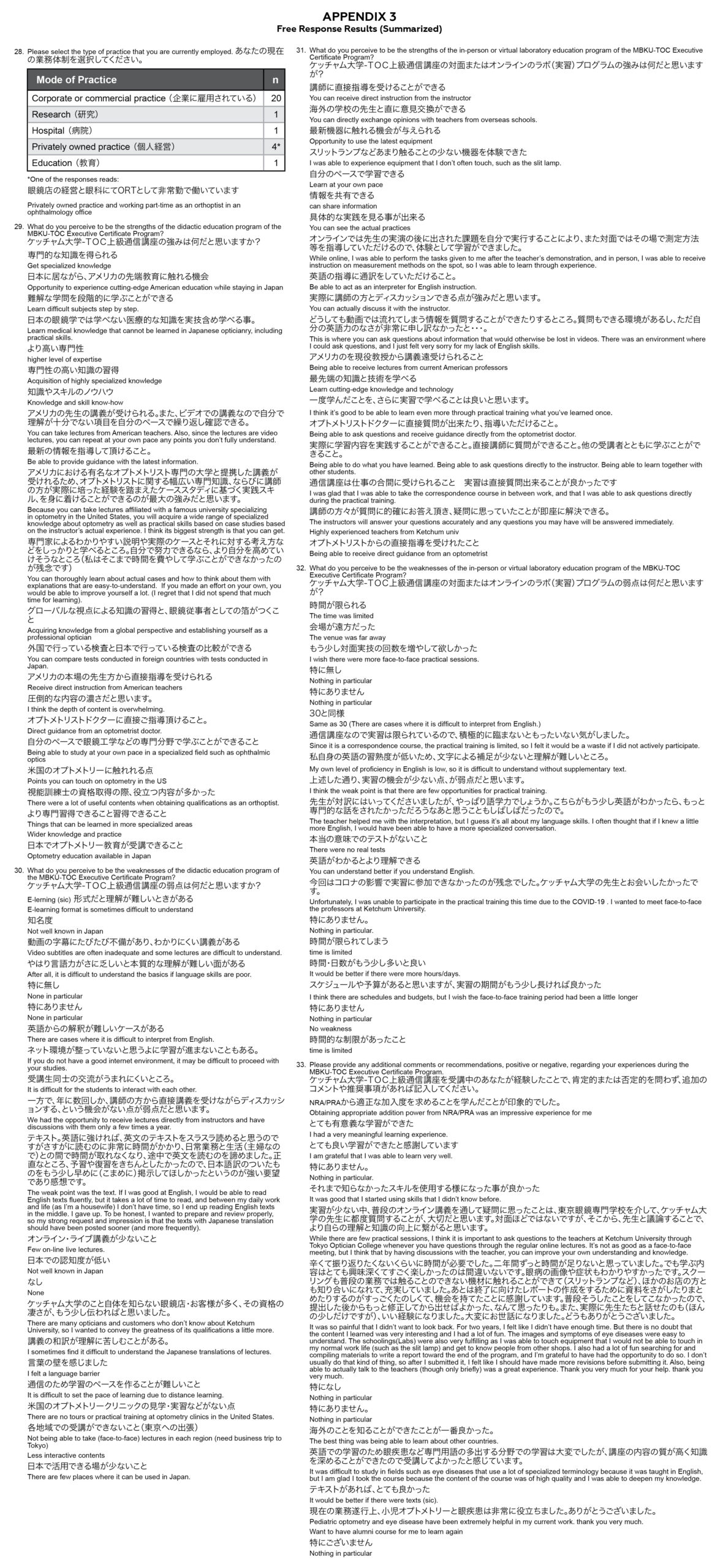
There were six free response questions (Appendix 3). On free response Question 28, which asked the alumnus what type of practice they are currently employed, 20/28 respondents reported working in in a corporate or commercial setting. Five reported working in a privately owned practice and one each in a research, hospital or educational setting.
Question 29 asked about the strengths of the didactic program. The general trend in response was variations of “gaining additional knowledge”. Question 30 asked about weaknesses regarding the didactic program. There were multiple answers, but the general comments were mostly regarding the language barrier. Question 31 was in relation to the strengths of the laboratory portion of the program whether it was in-person or virtual. The consensus responses included the “ability to interact with professors from MBKU” and the “use of equipment not available to the students in the general program”. Question 32, regarding weaknesses in the laboratory portion of the program, showed a general consensus of either “no weaknesses” or that the “amount of time spent in the labs were limited”. Lastly, Question 33 asked for comments and recommendations, whether they were positive or negative about the overall program. There were a few comments, but most were regarded as positive. Not all students answered every free response question asked.
Discussion
The executive certificate program offered by MBKU and TOC was considered a positive experience for the alumni. In particular, the curriculum topics chosen and the in-person experiences were found to be statistically significant and scored well. The executive certificate program was designed with an emphasis on a curriculum of advanced topics that would enhance and go beyond current practice in Japan. The program met its goal objective. Also highlighted in the surveys was the importance of face-to-face in-person experiences. This helped to “humanize” the program as most of the learning was done virtually. Students appreciated the ability to interact with all the professors, have questions answered immediately, and utilize equipment demonstrated and/or perform techniques discussed in lectures.
Course topics that scored particularly high included specialty clinical care courses such as low vision, geriatric optometry, ocular health procedures, pediatric optometry, ocular disease and sports vision. Introduction and emphasis on clinical care beyond refraction and visual care was a critical component in the development of the curriculum. Delivery of this information made a significant impact on the alumni. This gained knowledge and strong response may eventually lead to an evolution of the profession in the future. Also garnering strong positive responses was the binocular vision course, of which MBKU has been recognized in the optometry program.
For the in-person laboratories, Lab 1: retinoscopy, binocular and accommodative testing; and Lab 4: ocular health procedures scored statistically high. Lab 1 emphasized techniques used in the MBKU optometry program for evaluating refractive, binocular and accommodative conditions. The lab also illustrated case studies using information gathered from these procedures in the actual care of patients. Although many techniques are similar between what is taught at MBKU and the training for opticianry in Japan, presentation of material in a different perspective may have been helpful and valuable to the alumni in applying their new knowledge to their current practices and patient care, one of the objectives of the program. Lab 4 scored high as it demonstrated and trained the alumni on procedures, techniques and equipment used in the evaluation of ocular health. Evaluating the eye itself, rather than its visual components, added something they had never done before. The lab also gave the alumni the opportunity to use cutting edge technology such as the OCT and Optical Coherence Tomography Angiography (OCT-A). Survey comments regarding in-person laboratories were considered positive, especially noteworthy were comments highlighting the ability to interact with TOC and MBKU professors. Unfortunately, the limited amount of time devoted to this portion of the program was noted as well.
Lastly, the question of overall improvement in knowledge of optometric care was statistically significant for the “very good” and “excellent” categories. It helped to accomplish the overall objective of the program, which was to provide knowledge and skill above and beyond those presently found in practice.
Upon reflection, the strengths of the program stem from the enthusiasm of the administration and faculty at MBKU and TOC, as well as the students’ desire to learn beyond their scope of practice. All students were active opticians. They were able to learn at their own pace asynchronously within a semester. Using Moodle, students were able to interact with faculty regarding course material, including answering questions and discussions on projects. Assessments on Moodle also allowed the faculty to track progress in the program. The greatest strength was the face-to-face meetings in Japan by one of the MBKU faculty every semester. The four 2-day sessions (with the exception of COVID-19 modified 1-day sessions) allowed for both schools to jointly teach the students in person. It also enabled the students to interact with each other, to share ideas and perspectives. During these gatherings the students had hands-on experience with equipment and skills they had never performed before; including but not limited to vision therapy equipment and techniques, low vision devices, and ocular health procedures such as the slit lamp biomicroscope, automated visual field instruments and optical coherence tomography. As students with experience in the use of vision care equipment, they were adept at learning new equipment quickly on each other and interpreting the results. With continued training similar to an accredited optometry program in North America, they could perform these skills on patients more like North American licensed optometrists.
Most of the internally identified weaknesses of the program were logistical. Creation of curriculum materials for this program was done outside of regular faculty hours for the MBKU optometry program. Thus, lectures, labs, discussions and assessments were created based on available time by the instructor of record, which varied. All materials needed to be transcribed for the faculty at TOC to translate, which also added to the delay. The technology for auto captioning or artificial intelligence did not exist at the time. Time zone differences made it difficult to have live sessions as evenings in the US were early mornings of the next day in Japan. The logistics of finding creative ways to bring equipment into Japan to deliver labs in-person was also a challenge. Initial investment in time and costs was a difficult task. Despite these obstacles, the program was a success in delivering an expanded scope of practice curriculum to Japanese opticians for potential expansion of scope of practice for their profession.
From the survey, multiple alumni stated that the language barrier affected their ability to learn effectively and efficiently in the didactic portion of the program. They also stated there was a learning curve to using the online platform, and some also noted that learning the material through remote learning was not the most ideal. Regarding the in-person laboratory component, the language barrier was considered an obstacle as none of the MBKU laboratory instructors were fluent in Japanese. Instructions and topics had to be translated into Japanese by the TOC professors. Other comments included the limited time together for the laboratories and the distance students had to travel to participate in the mandatory laboratories.
Although the program was considered a success by both schools, the program was placed on hiatus at the request of TOC. There were three main reasons. First, the COVID-19 pandemic fundamentally changed how the program was presented. Due to travel restrictions, live in-person 2-day labs were transformed into one 2-hour live demonstration of equipment and skills without students accessing any of the equipment or feedback on their skills. Indefinite postponement of the program was not an option like all other educational programs around the globe. This affected multiple cohorts over multiple years and there was concern regarding the effectiveness of the program without the live component. Second, there has been a petition in Japan for national licensure of opticians in the national Diet, the national legislature. TOC was a proponent of the bill. Thus, priority, energy and time were directed at its passage. Lastly, TOC had a new head administrator and MBKU, a new university president. Both administrations had other priorities regarding their primary programs. Thus, the current hiatus in the program. The relationship between both programs remains positive.
Finally, the authors were disappointed with the limited number of articles related to optometry in Japan or collaboration between ophthalmology with opticians and orthoptists in Japan. Also, the limited number of articles available were not recently published. Multiple attempts using different library resources, and with the assistance of reference librarians, yielded the results used in this article. Although this paper concentrated on the MBKU-TOC executive certificate program, success of other collaborative multinational curricula should be published to highlight the growing global need for eye care and how these contemporary programs address that need. It is with hope that this article will stimulate future papers on the topic of collaborative international optometry programs.
Conclusion
Currently, most program alumni practice in corporate or commercial practice. This is not surprising as it is the custom in Japan for graduates of opticianry programs to work in this mode of practice. Only one works in a healthcare environment. The current perspective in Japan is that opticians are not healthcare providers. Alumni of this program have noted how people who visit optical shops are addressed as customers or clients, not patients. There is no healthcare component. There is no need for continuity of care. There is no doctor-patient relationship. Unfortunately, the Japanese population does not see opticians as healthcare providers. By creating this program and presenting vision and eye care provided by North American optometrists, there may be a spark of inspiration for current Japanese opticians to aspire for an expansion of scope of practice, like the US in the past century. The challenges in Japan today are similar to those of the US regarding the perception of the role of opticians and to their relationship to ophthalmologists. With an increase in the aging Japanese population, the demand for health care increases.10 If the demand is not met by the current level of healthcare providers, there exists an opportunity for opticians to fill the void by performing ocular health procedures as an optometrist. This program shows there is potential for future growth in Japan and other countries to expand and provide proper eye care through expanded training programs in formal education. Despite language barriers, time zone variances and traveling great distances, these are not major deterrents for international collaboration. A demonstration of expanded scope of practice in the US and Canada to other countries may serve as a model for their evolution. An emphasis on person-to-person interaction in the home country enhances the delivery of the curriculum and success in the program.
Acknowledgements
The authors would like to acknowledge and thank Diana Dicdican-Nguyen for her contributions to the program.
Conflicts of Interest
The authors have no conflicts of interest to report.
Appendices
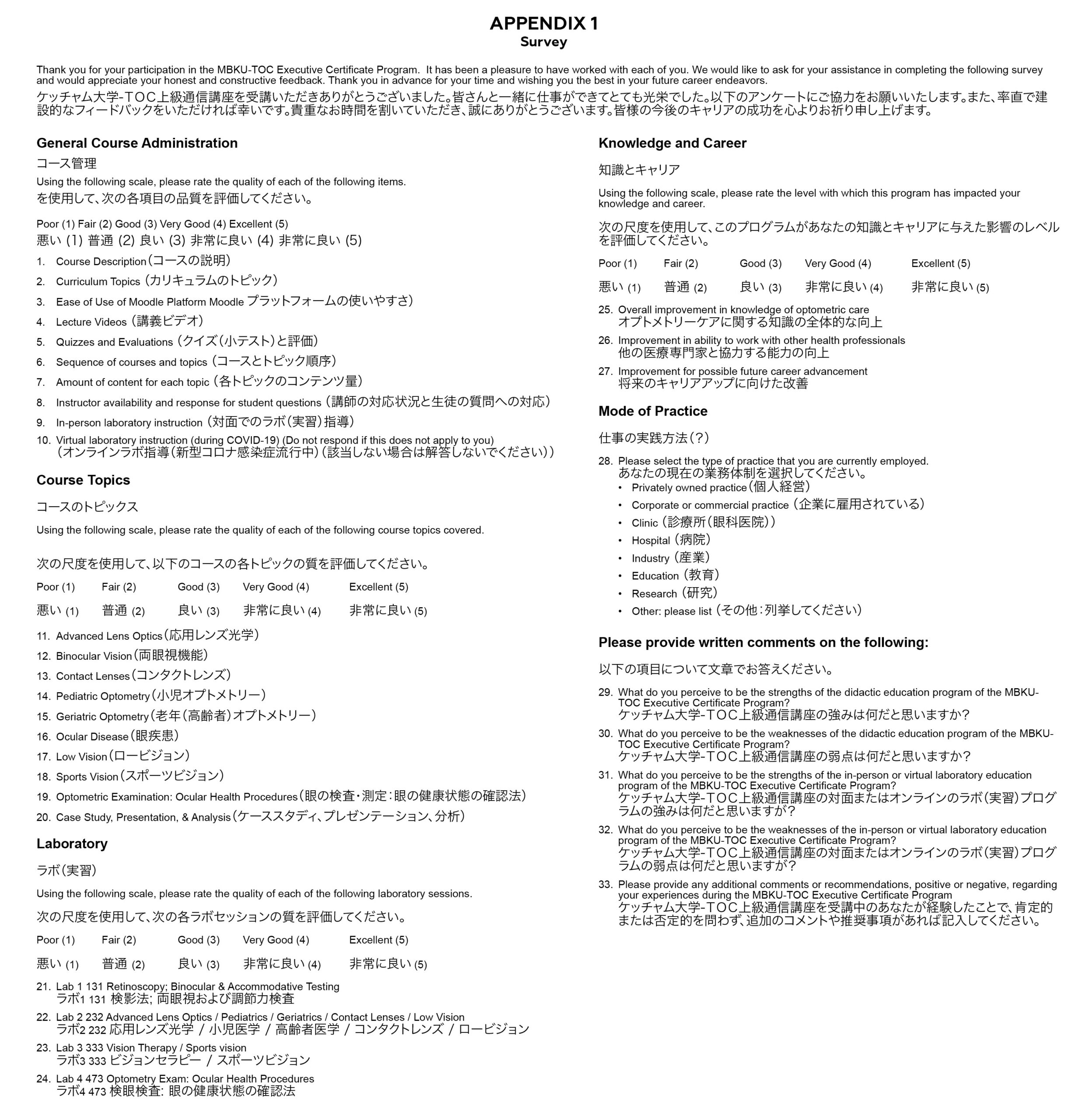
Appendix 1. Survey. Click to open PDF
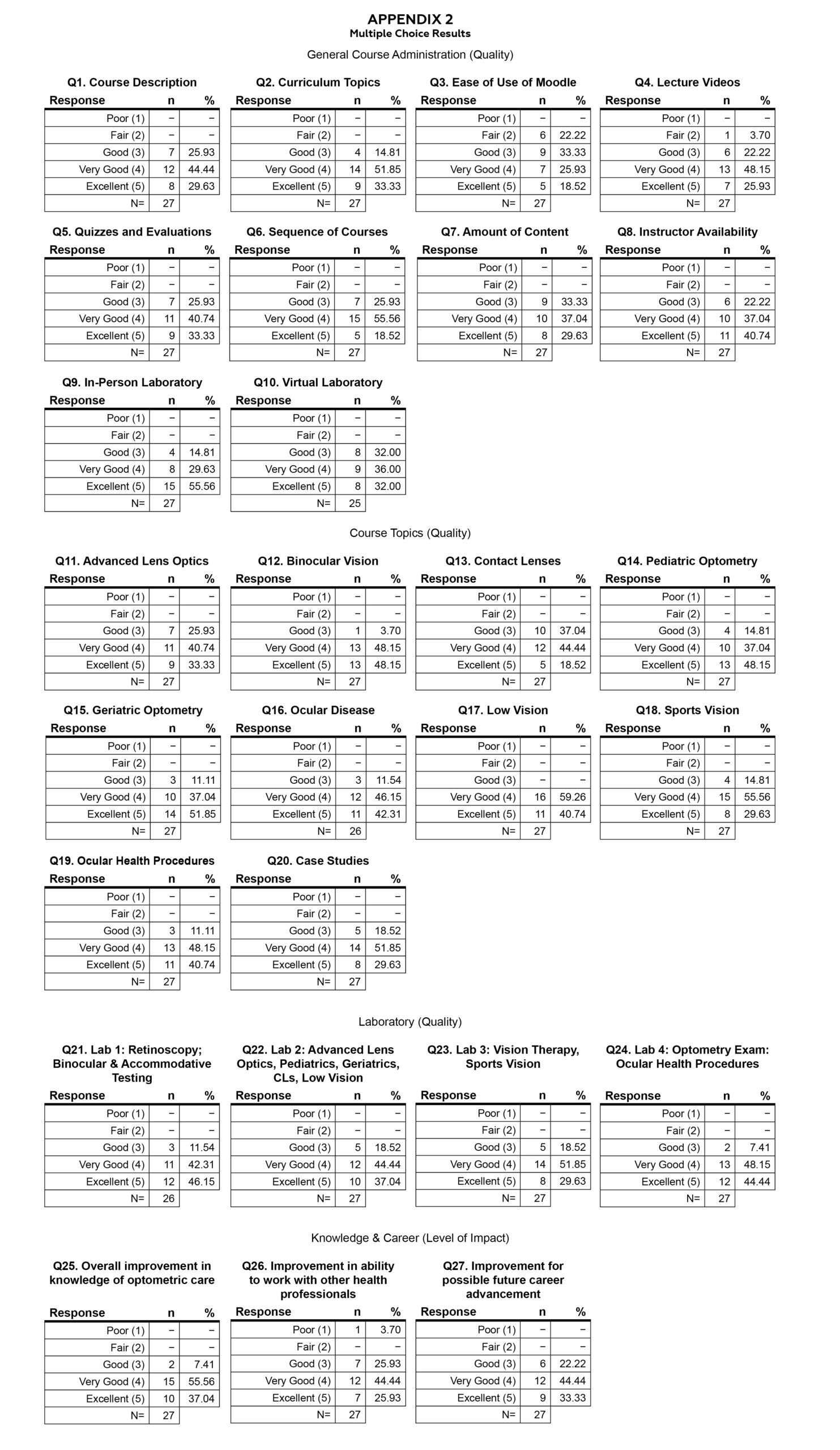
Appendix 2. Multiple Choice Results Click to open PDF
Appendix 3. Free Response Results (Summarized)Click to open PDF
References
References
- Yamada M, Hiratsuka Y, Roberts CB, et al. Prevalence of visual impairment in the adult Japanese population by cause and severity and future projections. Ophthalmic Epidemiol. 2010 Jan-Feb;17(1):50-7. DOI: 10.3109/09286580903450346
- World Health Organization. World Report on Vision. 1st Geneva: 2019.
- Welcome to JACO website [Internet]. Japan: Japanese Association of Certified Orthoptists; c2023 [cited 2024 January 24]. Available from: https://www.jaco.or.jp/english/
- National Eyeglasses Certification [Internet]. Japan: All Japan Optometric and Optical Association; c2023 [cited 2024 January 24] Available from: https://www.megane-joa.or.jp/
- Greenspoon, M. K. An Optometric Visit to Japan. Hindsight: J Optom Hist. 2018; 49(1).
- Kimbara K, Bleything WB. The delivery of health care and eye care in Japan. J Am Optom Assoc. 1991 Jun; 62(6):483-9.
- Bailey RN. Eye and vision care in Japan. J Am Optom Assoc. 1986 Apr; 57(4):271-2.
- Bailey RN, Hayashi M. Optometric eye and vision care in Japan: an update. Optometry. 2003 Oct;74(10):619-22.
- Shneor E, Isaacson M, Gordon-Shaag A. The number of optometrists is inversely correlated with blindness in OECD countries. Ophthalmic Physiol Opt. 2021 Jan;41(1):198-201. DOI: 10.1111/opo.12746
- Roberts CB, Hiratsuka Y, Yamada M, et al. Economic Cost of Visual Impairment in Japan. Arch Ophthalmol.2010 Jun;128(6):766–771. DOI:10.1001/archophthalmol.2010.86